Living with ADHD: Practical Tips for Adults

Living with ADHD — an introduction to daily functioning
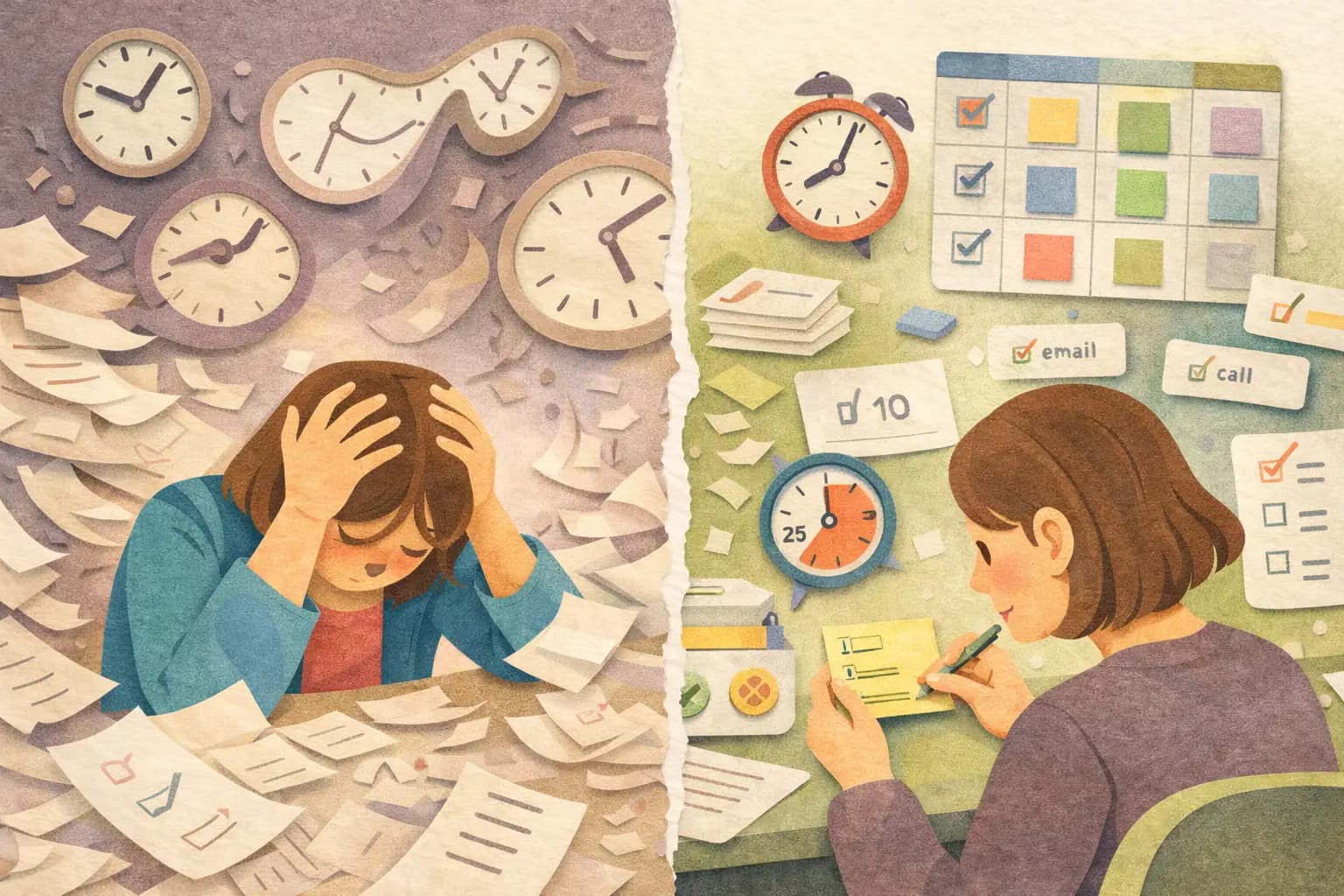
Living with ADHD as an adult is not only a challenge — it is also an opportunity to discover unique strengths and learn strategies that can improve functioning more than before. Many people feel relief after diagnosis, but quickly face the question: how do I actually organise my life so that ADHD is not an obstacle, but a part of me I can live with well?
Daily life with ADHD calls for a conscious approach to time organisation, attention management, and creating structures that support — rather than constrain — the brain's natural way of working. In this guide you will find practical strategies to help you transform chaos into control, and stress into productivity.
Living with ADHD is not a fight against yourself — it is learning to collaborate with your own mind. With the right strategies, people with ADHD can function well, drawing on their natural talents while managing everyday challenges.
Understanding your ADHD patterns
Recognising your own symptoms in daily life
The first step is honest observation of your ADHD symptoms across different situations. Do difficulties intensify at particular times of day? Which tasks make concentration hardest? When do you feel most productive?
Identifying your energy and concentration patterns
Every person with ADHD has a unique energy rhythm. Some are most focused in the morning; others reach their peak in late evening. Spotting these patterns lets you schedule your most important tasks during periods of naturally high concentration.
Knowing your strengths
ADHD comes with more than just difficulties. Many people with the disorder show great creativity, the ability to multitask on interesting projects, a knack for rapid responses in crises, and natural enthusiasm for new ideas.
Time management and calendar use — practical strategies
Pomodoro technique adapted for ADHD
The classic Pomodoro technique (25 minutes of work + 5 minutes' break) can be too long for people with ADHD. Experts recommend starting with shorter sessions[1]:
- 10–15 minutes of concentration + 3–5-minute break for those just starting
- 15–20 minutes of concentration + 5-minute break once you have settled in
- Use a visual timer with a gentle sound to avoid creating stress
Planning with a time buffer
Add 25–50% extra time to estimated deadlines. If you think a task will take an hour, schedule 75–90 minutes. This buffer accounts for unexpected interruptions and the difficulty of re-focusing attention.
The "agreements with yourself" system
Instead of vague goals like "clean the house," use specific deadlines: "by Saturday at noon I will clean the living room." Precise deadlines activate accountability and help with planning.
Calendar as an external brain
- Write everything down — even the simplest tasks
- Use colours for categories (work, home, health)
- Set reminders 15 minutes in advance
- Block transition time between activities
Do you have ADHD?
Quick online assessment based on the latest research
Improving concentration and eliminating distractions
Managing your environment
Eliminating visual distractions:
- An organised, minimalist workspace
- Remove unnecessary objects from your field of view
- Designate a specific place for work
Managing technology:
- Turn off notifications on phone and computer
- Use social media-blocking apps during work
- Check messages only at set times
Techniques for restoring concentration
When attention drifts:
- Stop-reset-restart: notice the distraction, take a deep breath, return to the task
- 5-4-3-2-1 technique: find 5 things you see, 4 you hear, 3 you touch, 2 you smell, 1 you taste
- Mini-meditation: 2–3 minutes focusing on your breath
Managing hyperfocus
Hyperfocus can be both a strength and a problem. To keep it in check:
- Set alarms reminding you to take breaks and eat
- Break large projects into smaller stages with natural stopping points
- Use this capacity deliberately on your most important tasks
Building routines and task lists
Creating effective routines
Morning routines:
- Prepare everything the evening before (clothes, documents, keys)
- Create a simple sequence of 3–5 key activities
- Use checklists at first, until the routine is ingrained
Evening routines:
- Prepare for the next day (check calendar, lay out clothes)
- Screen-free relaxation 30 minutes before bed
- Reflection — 2–3 wins from the day
Effective to-do lists
The 1-3-5 rule:
- 1 large task per day
- 3 medium tasks
- 5 small, quick tasks
Task categorisation:
- Urgent and important (do today)
- Important, not urgent (schedule for later)
- Urgent, not important (delegate or do quickly)
- Not urgent, not important (remove from list)
Reward and motivation systems
- Celebrate small wins — finishing any task is an achievement
- Set rewards for completing difficult duties
- Use positive reinforcement rather than self-punishment
Managing chaos in your environment
Organising your space
The "a place for everything" rule:
- Designate specific spots for keys, documents, and tools
- Use labels and organisational boxes
- Keep frequently used things within reach
Daily organisation system:
- 10 minutes each evening for a quick tidy-up
- 15 minutes daily on one small area (a drawer, a shelf)
- 1 hour at the weekend for bigger clean-ups
Managing paperwork and documents
- Digitalise everything you can
- Use a 3-tray system: to do, to review, to archive
- Handle things immediately if they take less than 5 minutes
Dealing with too many possessions
ADHD often makes it difficult to part with unnecessary items. Helpful strategies:
- The one-year rule — if you haven't used it in a year, give it away
- One-in-one-out — every new item means giving one away
- One item a day to give away
If clutter at home is something you've struggled with for a long time, the dedicated article on ADHD and home clutter goes deeper into why classic organising advice fails and how to build low-friction zones that actually hold.
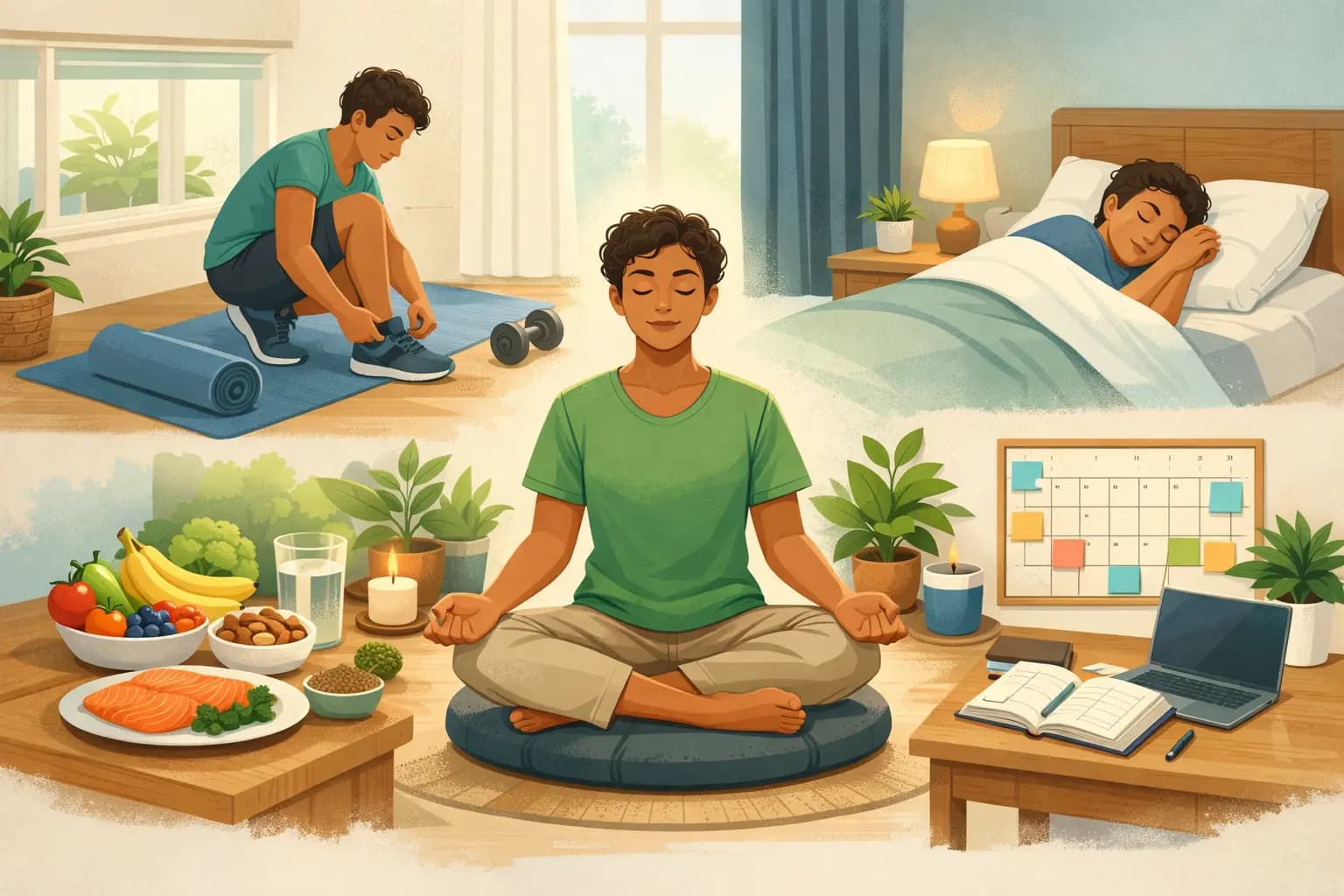
Relaxation techniques and a healthy lifestyle
Stress and emotion management
Quick emotional-regulation techniques:
- 4-7-8 breathing: inhale for 4, hold for 7, exhale for 8
- Progressive muscle relaxation: alternate tensing and relaxing muscle groups
- 5-4-3-2-1 grounding: engage the senses to return to the present
Long-term strategies:
- Regular physical activity — even 20 minutes daily (see natural support methods)
- Mindfulness and meditation adapted for ADHD (shorter sessions, guided)
- Cognitive-behavioural therapy (more on ADHD treatment)
A healthy lifestyle that supports ADHD functioning
Sleep and sleep hygiene:
- Consistent rhythm — similar bedtime and wake time every day
- Limit screens 1 hour before bed
- Cool, dark bedroom with minimal distractions
Nutrition supporting concentration:
The full guide is in the article on natural lifestyle methods for ADHD, but key elements include:
- Regular meals with protein and complex carbohydrates
- Limiting simple sugars and excessive caffeine
- Omega-3s, magnesium, and vitamin D as supporting supplements
Physical activity:
- At least 20–30 minutes of movement daily
- Cardio for improving concentration and emotional regulation
- Strength training for building discipline and confidence
Managing procrastination
Understanding the roots of procrastination in ADHD
Procrastination in ADHD is not laziness — it is the result of how the brain specifically works. The main causes are:
- Executive paralysis — difficulty starting a task
- Perfectionism and fear of failure
- Trouble estimating time and prioritising
A detailed guide is in the article on procrastination and ADHD.
Strategies for overcoming procrastination
The "2-minute rule":
If a task takes less than 2 minutes, do it immediately. For larger tasks, find a fragment that can be done in 2 minutes.
Breaking tasks into micro-steps:
- Instead of "write the report" → "open the document," "write the title," "write the first paragraph"
- Each step should be so simple it is hard to put off
Temptation bundling:
Pair boring tasks with enjoyable activities — for example, listen to a podcast while cleaning.
Building support systems
Professional support
- Psychiatrist — monitoring pharmacological treatment
- Psychotherapist specialising in ADHD
- ADHD coach — practical strategies for daily life
- Support groups online and in person
Support from family and friends
- Educate loved ones about ADHD and its impact on daily life — and on debunking ADHD myths
- Set clear boundaries and expectations — understanding how ADHD affects relationships can help both sides communicate better
- Use body doubling — the presence of others can improve concentration
Building accountability
- Accountability partner — someone you regularly update on your progress
- Public commitments — sharing your goals with others
- Habit-tracking apps with a community feature
Do you have ADHD?
Quick online assessment based on the latest research
FAQ
1. Do strategies for living with ADHD require major lifestyle changes?
No — it is best to start with one small change at a time and gradually build on it. Large changes can be overwhelming.
2. What if a strategy stops working?
That is normal — the ADHD brain needs novelty. Regularly modify and adapt your strategies to current needs.
3. Can you function well with ADHD without medication?
Some people manage with behavioural strategies alone, but pharmacological treatment often makes it significantly easier to implement those strategies.
4. How long does it take to build new habits with ADHD?
For people with ADHD it may take 2–3 times longer than for neurotypical people — be patient with yourself.
5. What to do on bad days when nothing seems to work?
Have a "bad day" plan — simplified tasks, more focus on self-care, acceptance of lower productivity.
6. Do I need to implement all strategies at once?
Absolutely not — pick 1–2 that seem most important and start there. Add more gradually.
Summary — living with ADHD as a journey, not a destination
Living with ADHD is an ongoing process of discovering what works for you and what doesn't. There is no single universal formula for success — each person must find their unique set of strategies and tools.
The most important principles:
- Be patient with yourself — changing habits with ADHD takes time
- Experiment — what works for others may not work for you
- Celebrate small wins — every step forward is an achievement
- Remember your strengths — ADHD brings not only challenges but unique talents too
With the right strategies and support, people with ADHD can lead full, productive, and happy lives. The key is not fighting against your brain, but learning to work with it.
If you suspect you might have ADHD or want to understand your symptoms better, starting with a screening test can be the first step toward changing your life for the better.
Useful resources
Apps and tools for daily life
- Habitica – gamified tasks and habits
- Notion – life and project organisation
- Tiimo – visual planning app designed for ADHD
- How to ADHD – YouTube – popular channel with practical advice
Supporting organisations
- CHADD – Adults with ADHD – comprehensive resources for adults
- ADDitude – Life with ADHD – practical everyday advice
- ADHD Coaches Organization – ADHD coach directory
- Understood.org – ADHD in Adults – educational resources
Scientific sources
[1] Ramsay, J. R., & Rostain, A. L. (2015). The Adult ADHD Tool Kit: Using CBT to Facilitate Coping Inside and Out. Routledge.