ADHD Myths and Facts: What Adults Need to Know
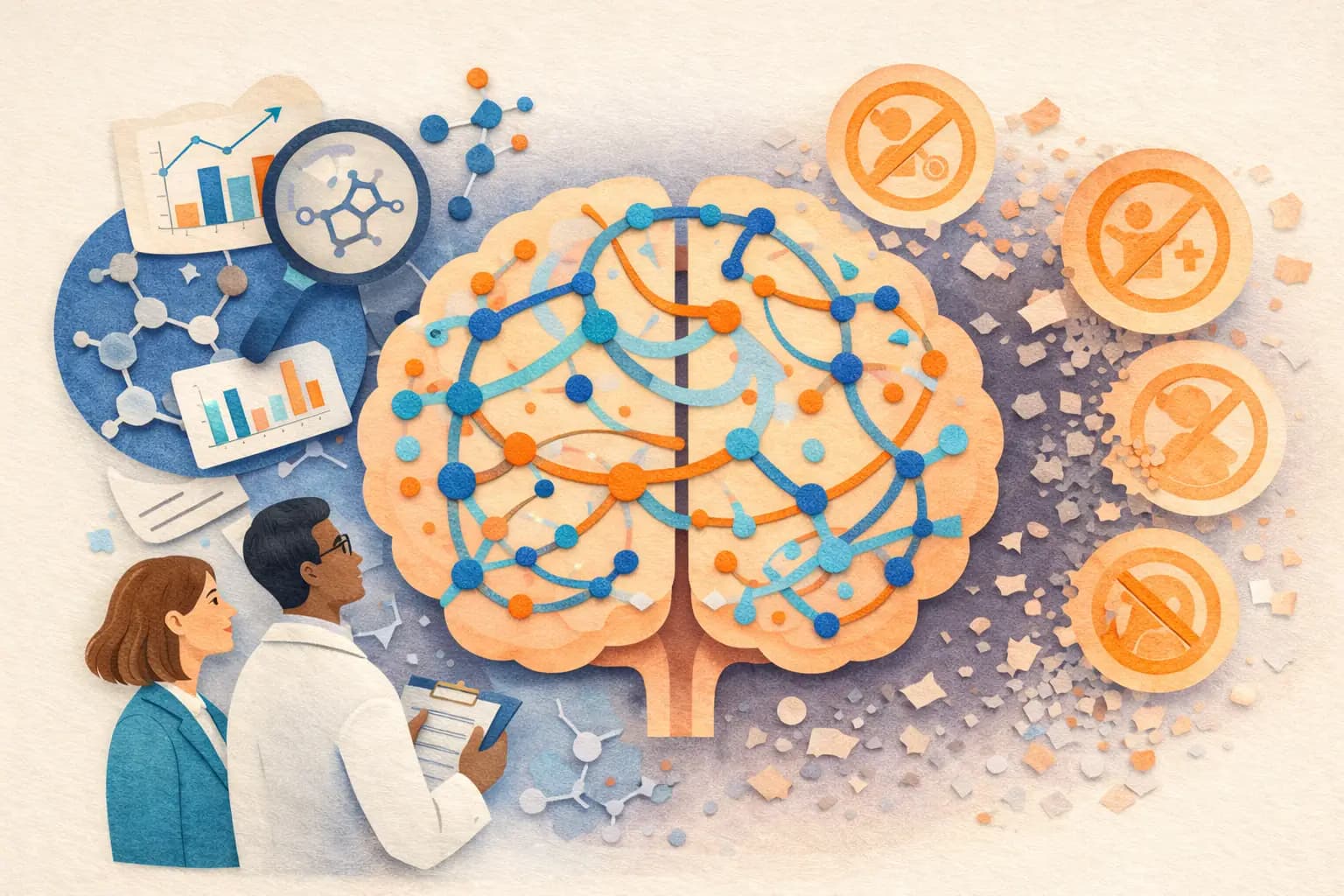
ADHD is one of the most misunderstood neurological disorders of our time. Despite growing public awareness, many myths and misconceptions surround attention deficit hyperactivity disorder — and these often harm people with the condition more than the adult ADHD symptoms themselves. Stereotypes lead not only to social stigma but also to delayed diagnosis and inappropriate treatment.
Why does debunking these myths matter? Misunderstandings about ADHD frequently leave adults struggling with symptoms for years without understanding their source. Their behaviour being misread as laziness, lack of willpower, or bad character destructively affects self-esteem and quality of life. ADHD is a well-documented neurodevelopmental disorder that requires proper recognition and appropriate support. An early ADHD diagnosis can radically change the life of someone with the disorder.
Myth 1: ADHD only affects children
Fact: ADHD is a disorder that accompanies a person throughout life. Contemporary neurological research clearly shows that in 35–65% of children with ADHD, symptoms persist into adulthood[1]. The problem is that ADHD was erroneously considered a "childhood disorder" for decades, leaving thousands of adults without a diagnosis.
Adult ADHD symptoms can take different forms from those seen in children. While a child may show marked physical hyperactivity, an adult often struggles with inner restlessness, time management problems, or difficulty regulating emotions. Many adults receive a diagnosis only in their 30s, 40s, or even 50s — sometimes having discovered ADHD in the context of their child's diagnosis.
Neuroscience confirms the permanence of this disorder. Brain imaging studies show that the characteristic differences in dopaminergic system function and executive-function structures seen in ADHD persist throughout life. This means an adult with unrecognised ADHD may interpret their difficulties as personal failures for years, without understanding their neurological basis.
Myth 2: People with ADHD are simply lazy with weak willpower
Fact: ADHD is a neurodevelopmental disorder with documented differences in brain structure and function. Modern brain-imaging technologies such as functional MRI (fMRI) clearly reveal differences in activity in the areas responsible for attention, impulse control, and executive function.
The dopaminergic system plays a key role. In people with ADHD the baseline level of dopamine is lower, which makes it harder to focus on uninteresting or monotonous tasks — and explains why ADHD and procrastination are so closely linked. Simultaneously, during fascinating activities, a rapid release of dopamine occurs, which can lead to hyperfocus — a state of extreme concentration that also characterises ADHD.
This neurological mechanism explains why someone with ADHD can read an interesting book for hours but have enormous difficulty completing a simple form. It is not about laziness or lack of motivation — it is about differences in how the brain processes information. Many people with ADHD show remarkable productivity and creativity in areas that captivate them, which decisively contradicts the laziness stereotype.
Myth 3: ADHD is a made-up disorder or a trendy diagnosis
Fact: ADHD is one of the most thoroughly studied neurological disorders in medicine. First descriptions of ADHD-like symptoms appeared in the medical literature as far back as the eighteenth century. The disorder is officially recognised by all major global health organisations, including the World Health Organization (WHO) and the American Psychiatric Association.
Genetic studies show that ADHD has one of the highest heritability rates among psychiatric disorders — 60–90%[2]. Genetic factors play a dominant role in its development. Dozens of genes linked to ADHD have already been identified, particularly those responsible for dopamine and noradrenaline metabolism[3].
Meta-analyses of structural and functional brain studies consistently show differences between ADHD brains and control groups — including reduced prefrontal cortex volume, differences in attention-network activity, and atypical connectivity between different brain regions. These objective neurological data definitively dispel the myth of a "made-up disorder."
Myth 4: ADHD results from poor parenting or lack of discipline
Fact: No scientific research confirms any link between parenting style and the development of ADHD. On the contrary — numerous studies show that ADHD is primarily genetic and neurobiological in origin. The disorder occurs in families with widely varying parenting styles, education levels, and socioeconomic backgrounds.
Although environment can influence ADHD symptom severity, it does not cause the disorder. Chronic stress, traumatic experiences, or inadequate parenting can worsen functioning in someone with ADHD, but they do not produce the condition. It is worth noting that parents of children with ADHD often have the disorder themselves — a consequence of its heritability, not of "bad parenting" being passed down through generations.
This myth is especially painful for parents who frequently hear suggestions that if they were more consistent or strict, their child would "behave normally." Such social attitudes add extra stress to families already managing the challenges of ADHD.
Myth 5: ADHD medications are dangerous and addictive
Fact: Properly used ADHD medications are among the safest and most effective treatments available — see ADHD treatment in adults. Stimulants and non-stimulants used in ADHD therapy have been the subject of tens of thousands of studies confirming both their efficacy and safety.
Paradoxically, untreated ADHD is associated with a higher risk of addiction. People with untreated ADHD are more likely to turn to psychoactive substances as a form of self-medicating their neurological dysregulation. Proper ADHD pharmacotherapy actually reduces this risk by normalising neurotransmitter system function.
Concerns about addiction often stem from a misunderstanding of how ADHD medications work. In people with the disorder, stimulants do not produce euphoria or a "high" — they help achieve an optimal level of central nervous system arousal that enables normal functioning. Long-term follow-up studies show that people treated pharmacologically for ADHD have better outcomes in education, career, and mental health.
Myth 6: ADHD always means hyperactivity
Fact: There are three main ADHD presentations, of which only one is characterised by predominant hyperactivity. The inattentive presentation — formerly called ADD — manifests primarily as problems with concentration, organisation, and working memory, without marked hyperactivity.
People with the inattentive presentation are often described as "dreamy," "scattered," or "absent-minded." This diagnosis is particularly often missed in women with ADHD, whose symptoms are less visible and less disruptive to others. Internal chaos, difficulty making decisions, and chronic forgetfulness can be the only outward signs of intense neurological struggle.
The combined presentation combines inattention symptoms with hyperactivity and impulsivity, but even here symptoms can change depending on age, situation, and stress level. An adult who was very physically active in childhood may in adulthood show mainly inner restlessness, a constant sense of tension, or a need for continuous stimulation.
Myth 7: People with ADHD cannot concentrate at all
Fact: People with ADHD often experience hyperfocus — a state of extreme concentration on interesting activities. Paradoxically, the problem is not an inability to focus but difficulty controlling attention and shifting it between tasks.
Hyperfocus can be both an asset and a challenge. On one hand it can lead to extraordinary results in areas of passion — breakthrough discoveries, innovative solutions, or exceptional artistic work. On the other it can lead to neglecting basic needs, difficulties in relationships, or problems maintaining balance across different areas of life.
The key to understanding ADHD is distinguishing between selective attention (choosing the right stimuli to focus on) and sustained attention (maintaining concentration over time). People with ADHD may struggle with the former, but with the right stimulation can show remarkable persistence with the latter.
Myth 8: Diet can cure ADHD
Fact: Although nutrition affects brain function and overall wellbeing, there is no scientific evidence that any diet can cure ADHD. The disorder has a neurobiological and genetic basis that cannot be changed by modifying one's diet alone.
However, some dietary changes can support ADHD treatment and improve quality of life. Regular meals help stabilise blood glucose, which affects concentration. Reducing sugar and highly processed food can decrease mood swings. Supplementing with omega-3 fatty acids or magnesium may ease some symptoms — see natural support methods for ADHD — though effects are usually modest.
Radical elimination diets promoted as "natural cures for ADHD" can be dangerous, potentially leading to nutritional deficiencies particularly harmful in children during development. Dietary changes should be treated as a complement to, not a substitute for, evidence-based ADHD treatment.
Do you have ADHD?
Quick online assessment based on the latest research
Frequently asked questions about adult ADHD
Can you develop ADHD as an adult?
No — ADHD is a neurodevelopmental disorder with origins in childhood. However, symptoms can be poorly visible or misinterpreted for years, leading to a diagnosis only in adulthood. Stressful life events or increased professional demands can reveal previously compensated difficulties.
Why is ADHD diagnosed more often in men?
Traditional ADHD diagnostic criteria were based mainly on symptoms seen in boys — hyperactivity and disruptive behaviour. In girls and women ADHD often looks different — through daydreaming, organisational problems, or perfectionism. Contemporary diagnostic approaches increasingly account for these differences.
Can ADHD be misdiagnosed?
Yes — there is a risk of both over-diagnosis and under-diagnosis. Some symptoms can be confused with depression, anxiety disorders, or PTSD — which is why a proper ADHD diagnostic process, including developmental history, current symptoms, and exclusion of other causes, is important.
Can someone with ADHD function normally?
Absolutely. With the right support, coping strategies, and where needed, pharmacotherapy, people with ADHD can lead full, productive lives. Practical tips for adults with ADHD show that many people thrive in various fields, often drawing on unique ADHD strengths such as creativity, spontaneity, and the capacity for intense focus.
Why it matters to know the truth about ADHD
Debunking ADHD myths has fundamental importance for people living with the disorder. Social stereotypes frequently lead to self-stigma and lowered self-esteem. When someone hears for years that their difficulties stem from laziness or weak character, they begin to believe it — which further worsens their functioning.
Properly understanding ADHD as a neurobiological disorder opens doors to effective treatment and support. Instead of fighting themselves for "more willpower," a person with ADHD can focus on developing coping strategies, making use of their natural strengths, and — where needed — seeking professional medical help.
Educating family members, friends, teachers, and employers is equally crucial — particularly important is understanding ADHD in family relationships. Understanding that a person's ADHD difficulties have real neurological underpinnings enables a more empathetic and constructive approach to co-operation and support.
If you recognise your experiences in the symptoms described here, don't hesitate to seek professional help. Early diagnosis and appropriate support can significantly improve quality of life and help you fully use the potential that a neuroatypical brain carries.
Do you have ADHD?
Quick online assessment based on the latest research
Useful resources
Organisations and websites supporting people with ADHD
- CHADD – Children and Adults with ADHD – the largest US ADHD support organisation; extensive knowledge base
- ADDitude Magazine – popular magazine and portal with practical ADHD advice
- CDC – ADHD Information – official Centers for Disease Control and Prevention information
- NIMH – ADHD – National Institute of Mental Health — research and facts
- WHO – Mental Health – World Health Organization overview
Scientific sources
[1] Faraone, S. V., Biederman, J., & Mick, E. (2006). The age-dependent decline of attention deficit hyperactivity disorder: a meta-analysis of follow-up studies. Psychological Medicine, 36(2), 159-165.
[2] Faraone, S. V., & Larsson, H. (2019). Genetics of attention deficit hyperactivity disorder. Molecular Psychiatry, 24(4), 562-575.
[3] Demontis, D., Walters, R. K., et al. (2019). Discovery of the first genome-wide significant risk loci for attention deficit/hyperactivity disorder. Nature Genetics, 51(1), 63-75.