ADHD and Procrastination: Why We Keep Putting Things Off
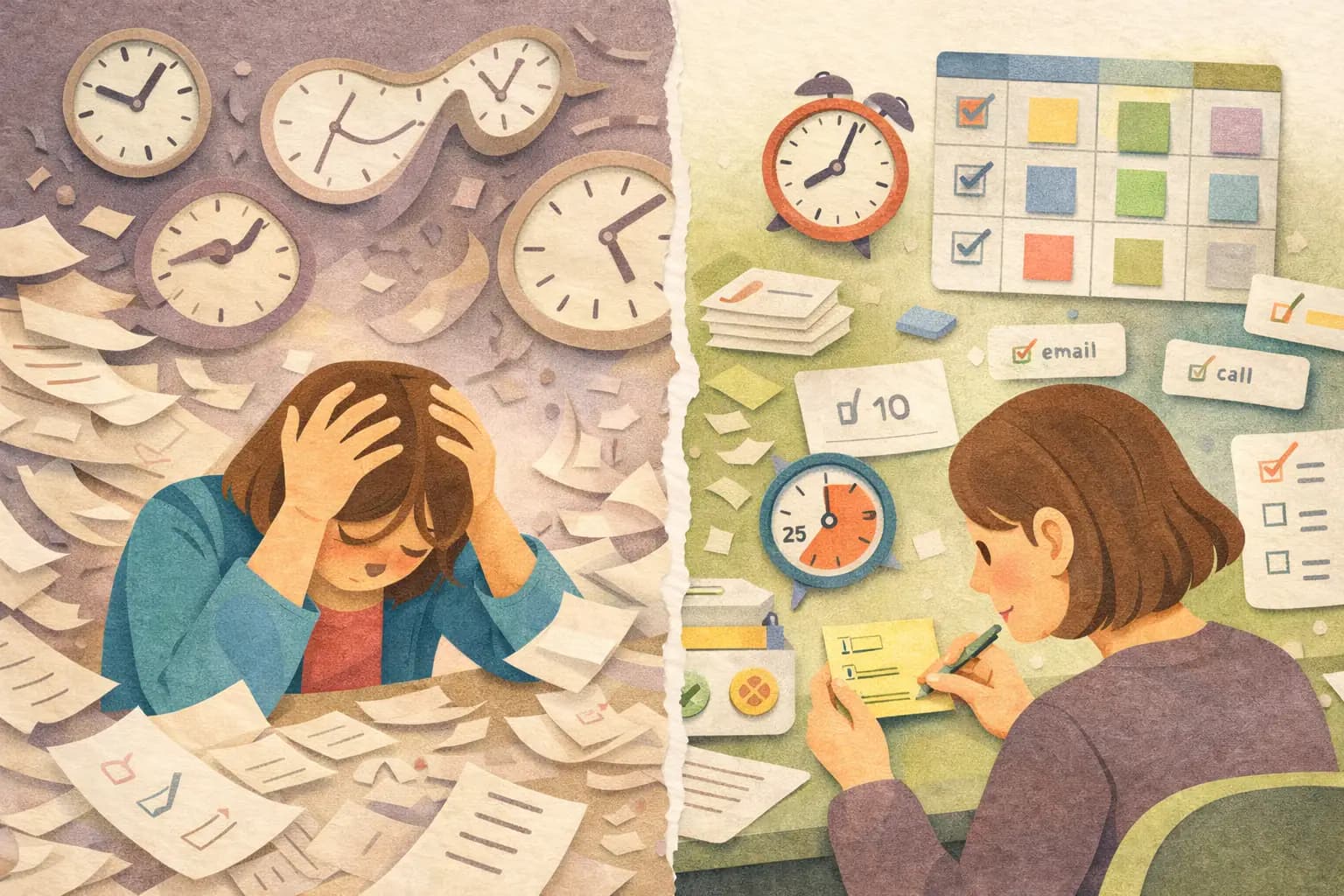
ADHD and procrastination — much more than laziness
Procrastination means delaying an intended action despite expecting negative consequences from the delay. See Steel's definition of procrastination. But for people with ADHD, procrastination can be far more debilitating and frustrating. Difficulties with organisation, attention, and time management can make taking action harder; no single cause explains every case of delay.
People with ADHD may delay tasks when they find it hard to get started or feel overwhelmed by the complexity of the task. That distinction changes everything about how to address the problem.
Why people with ADHD are prone to procrastination
Procrastination in ADHD may be accompanied by difficulties with planning, organisation, and starting tasks. Understanding these mechanisms is the first step toward dealing with the problem effectively.
Problems with executive functions
Executive functions are the set of skills responsible for planning, organising, initiating tasks, and controlling impulses. Executive function difficulties can occur with ADHD and make starting tasks harder, but they do not affect everyone in the same way. See Cleveland Clinic's explanation of executive dysfunction. Examples include:
- Difficulty initiating tasks
- Problems with planning — large tasks feel overwhelming and unclear
- Poor organisation — no clear structure for action
- Difficulty prioritising — everything seems equally urgent, or equally unimportant
The need for stimulation
A difficult or uninteresting task can be especially hard to start. This does not mean that every person with ADHD produces less dopamine or that stress or adrenaline replace it. It is worth checking what makes starting difficult in a particular situation: no clear first step, distractions, or feeling overwhelmed by the task.
Executive paralysis when facing large tasks
When a task seems too large or complex, people with ADHD can experience complete "freezing" — executive paralysis. Difficulty starting is not evidence of the myth of laziness. Cleveland Clinic describes "ADHD paralysis" as an informal term for feeling overwhelmed, not a separate medical diagnosis. It can feel like:
- Inability to start work despite the desire to and awareness of the task's importance
- Feeling overwhelmed by the size or complexity of the task
- A tendency to escape into easier, more stimulating activities
- Growing frustration and guilt about the delay
Do you have ADHD?
Quick online assessment based on the latest research
Time blindness — when time slips away unnoticed
"Time blindness" is an informal term for difficulty sensing the passage of time; difficulties organising time can occur with ADHD. See NHS guidance on ADHD in adults.
What is time blindness?
Time blindness is difficulty accurately perceiving the passage of time. Some people with ADHD describe experiences such as:
- Finding it hard to estimate how long a task will take
- Lose track of time while doing something interesting
- Fail to anticipate the time consequences of their decisions
- Future deadlines can feel distant and unreal
How time blindness affects deadlines
This impaired time sense leads to characteristic problems:
- Chronic lateness from underestimating preparation time
- Putting off tasks with the thought "there's still plenty of time" — even the day before the deadline
- Letting simple tasks drag on — a 5-minute job becomes an hour
- Planning too many tasks for a single day
Time blindness in daily life
- Thinking you need 10 minutes to get ready, and it takes 45
- Starting an important project a few hours before it is due
- Getting lost in social media "for a moment" and discovering two hours have passed
- Overloading the day's schedule
Practical strategies for fighting procrastination with ADHD
Dealing effectively with procrastination in ADHD requires strategies tailored to the disorder's specifics, as well as to everyday life with ADHD. Here are ideas to try; their usefulness depends on the person and situation. See NICE guidance on environmental modifications:
1. Break tasks into small steps
Large tasks need to be broken down into the smallest, most concrete actions possible:
Instead of: "Write the report"
Better:
- Gather source materials (15 min)
- Read the first article and take notes (30 min)
- Draft the report structure (20 min)
- Write the introduction (25 min)
Why this works:
- Small steps are less overwhelming
- It is easier to start a 15-minute task than a multi-hour project
- A completed step may give a sense of achievement and make continuing easier
2. A reward system for completing stages
You can try an enjoyable break after a stage of a task; this is not a way to replenish dopamine:
Example rewards:
- A favourite snack after finishing a task
- 15 minutes on social media after an hour of work
- An episode of a series after completing a larger block of tasks
- A walk or favourite music after a difficult task
When trying rewards:
- The reward must be proportional to the effort
- Do not make food, rest, or other basic needs conditional on finishing a task
- Rewards should be enjoyable but not habit-forming
3. Using timers and time-based techniques
You can try a timer as a reminder to work or take a break. The times below are examples, not recommendations for everyone with ADHD:
Pomodoro technique:
- 25 minutes of focused work
- 5-minute break
- After 4 cycles — a longer break (15–30 min)
Time boxing:
- Assigning a specific time slot to each task
- Example: "I will answer emails for 30 minutes"
- When the time is up, decide whether to take a break or move to the next step
Preparation timers:
- Setting a timer 10 minutes before you need to leave
- "Warning" alerts for approaching deadlines
- Break reminders during work
4. Eliminating distractions
People with ADHD are especially vulnerable to distraction, so creating a concentration-friendly environment is essential:
Digital distractions:
- Turn off notifications on phone and computer
- Use social media-blocking apps
- Work in focus mode or a separate browser profile
- Keep your phone in another room
Physical distractions:
- Tidy up your workspace
- Remove unnecessary objects from your field of view
- Prepare all materials before you begin
- Find a quiet place to work
Mental distractions:
- "Brain dump" — write down intrusive thoughts before working
- Keep a "later" list for ideas that come up
- Use breathing or meditation techniques to settle your mind
Discover more natural concentration-support methods.
5. Long-term strategies
Routines and habits:
- Create fixed procedures for recurring tasks
- Automate decisions (e.g. always do hard tasks in the morning)
- Apply the same organisational system consistently
External accountability:
- Work alongside others (body doubling)
- Publicly commit to goals to increase accountability
- Regular check-ins with a mentor or coach
Environment design:
- Create physical barriers to procrastination
- Design your task flow to feel natural
- Use visual cues as reminders
How to tell whether your procrastination might be ADHD-related
Procrastination can have many causes. The experiences below may prompt you to look at the wider picture of your difficulties, but they cannot establish an ADHD diagnosis. Assessment considers your history from childhood and the impact of symptoms on different areas of life. See NICE guidance on ADHD diagnosis:
Characteristic ADHD procrastination patterns:
- Procrastination is chronic — it has been present for many years in different situations
- It affects enjoyable tasks too — you delay even things you want to do
- You have periods of hyperfocus — sometimes you can work for hours without a break (see using hyperfocus at work)
- You may notice that deadlines prompt you to act; this alone does not indicate ADHD
- You have trouble estimating time — you frequently don't know how long tasks will take
- You are easily distracted — any sound or movement pulls your attention away
- You freeze in front of large projects and don't know where to begin
Other areas where difficulties may appear:
- Organisation and planning problems
- Difficulty with emotional regulation
- Impulsivity in various situations
- Working memory challenges
- Difficulty sustaining attention in conversations
- Restlessness habits such as tapping or fidgeting
Check the full list of adult ADHD symptoms to better understand your difficulties.
When to seek help
Procrastination becomes a problem warranting intervention when it affects quality of life — causing stress, relationship conflicts, or professional difficulties. If it is chronic and has lasted for years without improvement despite your attempts; if it triggers intense emotions such as shame, frustration, or guilt; or if it is accompanied by other symptoms such as attention, organisational, or impulse-control problems — professional help is worth considering.
Support options:
- A screening test as a first step toward understanding your difficulties
- Consultation with a psychologist or psychiatrist can help assess your difficulties; you do not need to take an online test first
- Considering an ADHD diagnosis if other symptoms are present
- ADHD coaching for practical life-organisation strategies
Myths about procrastination and ADHD
Myth 1: "Procrastination is simply laziness"
Truth: Difficulty starting a task may involve executive functions; on its own, it cannot tell you someone's motivation or establish an ADHD diagnosis.
Myth 2: "Just push through it"
Truth: People with ADHD need specific strategies and tools matched to their way of functioning.
Myth 3: "Deadline pressure always helps"
Truth: Time pressure does not always help. If it increases tension rather than making it easier to start, it is worth trying a different strategy.
Myth 4: "It is a character flaw"
Truth: ADHD is a neurological disorder that can be treated effectively and managed with the right strategies.
Do you have ADHD?
Quick online assessment based on the latest research
FAQ
1. Does everyone who procrastinates have ADHD?
No. Procrastination can have many causes — stress, perfectionism, anxiety, or simply being overloaded. Diagnosing ADHD requires a broader assessment of symptoms, their history, and their impact on life by an appropriately trained specialist.
2. Do people with ADHD always procrastinate?
Not always. Some people with ADHD tend toward excessive productivity or hyperfocus. Patterns vary.
3. Do ADHD medications help with procrastination?
Treatment is chosen by a specialist after an individual assessment. If you have an ADHD diagnosis and difficulty getting started still affects your life, discuss it with the clinician managing your treatment. Do not change medications or doses on your own. See NICE guidance on individual treatment planning.
4. How long does it take to see results from using these techniques?
There is no single verified timeline for all these approaches. Check whether your chosen method helps in a particular situation. If difficulties persist and affect your life, it is worth discussing them with a specialist.
5. What if no technique seems to work?
It is worth consulting a psychologist or psychiatrist specialising in ADHD. A more individualised approach or treatment of co-occurring problems may be needed.
6. Can procrastination in ADHD worsen with age?
More responsibilities can make organising time harder, but this does not mean procrastination must worsen with age. It is worth assessing your current difficulties and the support you need.
Summary — from understanding to action
In ADHD, delaying tasks may be accompanied by difficulties with organisation and getting started. Understanding this lets you replace self-accusation with effective strategies. The key elements are: breaking tasks into small steps to avoid feeling overwhelmed, trying enjoyable breaks after stages of work, using timers to manage time blindness, eliminating distractions to sustain focus, and building routines to reduce constant decision-making.
Remember that changing habits takes time and patience. Don't expect instant results — every small step in the right direction is already a success.
If you want to look at your difficulties with attention and organisation, you can take an ADHD screening test. It is worth discussing the result with a specialist if your difficulties affect your life.
Useful resources
Tools for fighting procrastination
- Focusmate – virtual co-working for accountability
- Cold Turkey – blocking distracting sites and apps
- RescueTime – time tracking and productivity insights
Organisations and articles
- Cleveland Clinic – ADHD paralysis – an informal term for feeling stuck and ideas for small steps
- Cleveland Clinic – Executive dysfunction – difficulties with planning and starting tasks
- NHS – ADHD in adults – symptoms, everyday difficulties, and seeking help
- NICE NG87 – ADHD diagnosis and management – specialist assessment and adapting the environment to individual needs
- Steel (2007) – The nature of procrastination – definition of procrastination
- ADDitude – Stop Procrastinating – articles on procrastination and ADHD
- CHADD – Time Management – time management overview
- How to ADHD – YouTube – videos on procrastination and ADHD strategies