ADHD Parenting: Managing Home, Kids, and Daily Overwhelm

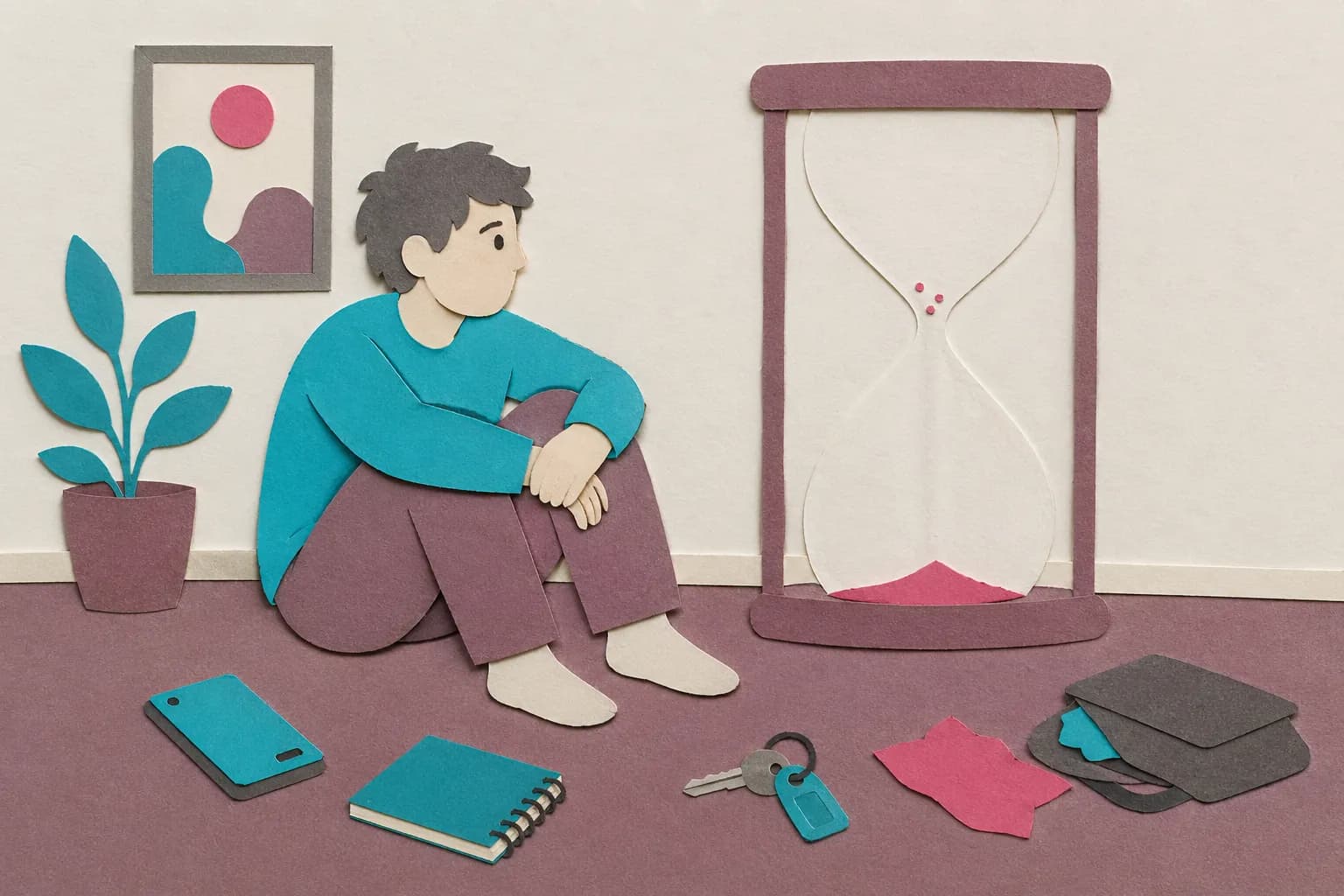
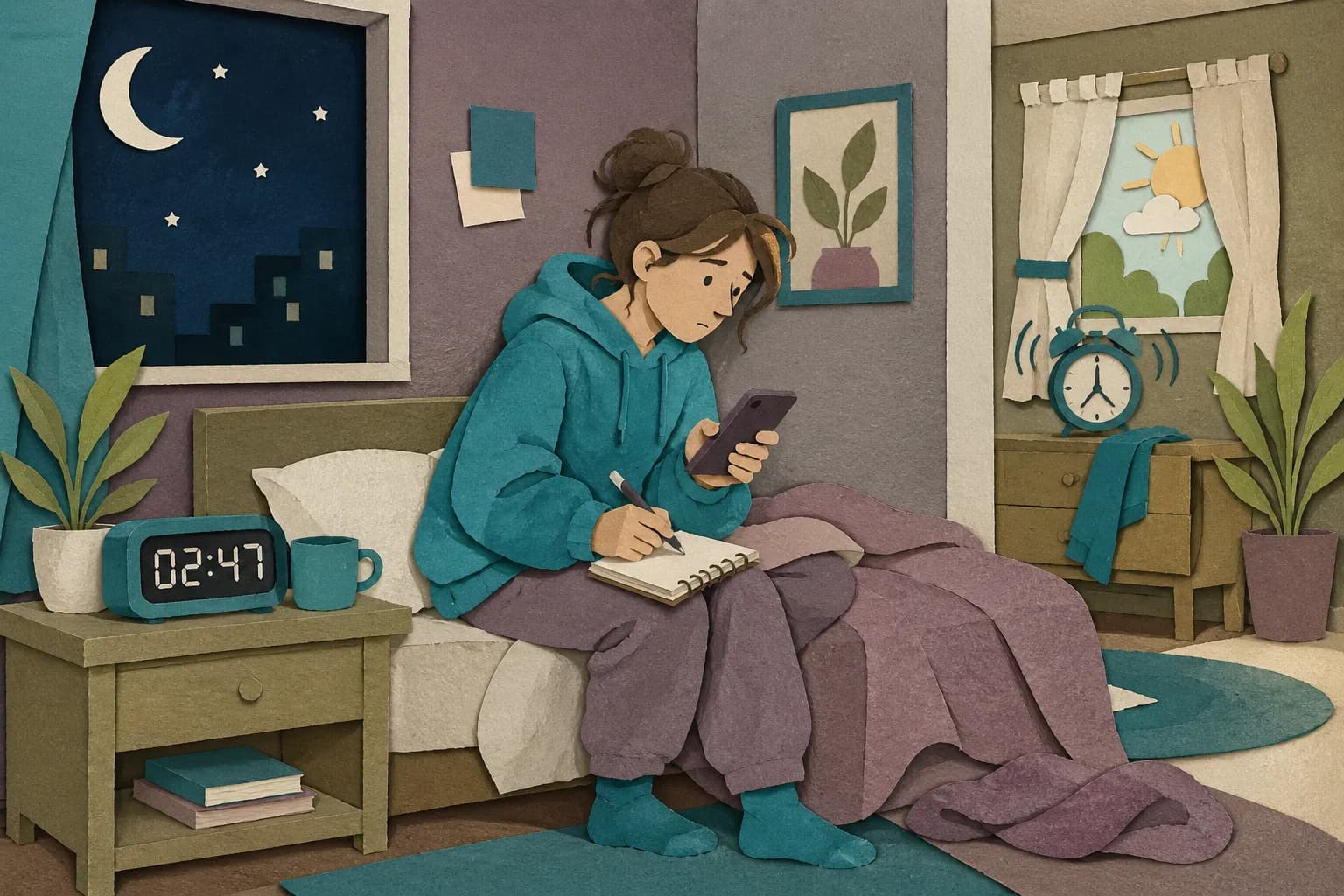
Parenting with ADHD rarely falls apart in dramatic moments. More often, it just quietly leaks. You sort of remember that you need to reply to the teacher, pack the PE kit, buy glue, start the laundry — and somehow not lose it when your child asks the same question for the third time. By evening, what's left is exhaustion and that familiar thought: I love my kid deeply, so why does all of this feel so overwhelming? The problem usually isn't a lack of care — it's an executive function system stretched thin by the constant demands of running a household.
That distinction matters, because guilt in parents with ADHD has a way of passing itself off as truth. Research shows that parenting places very high demands on attention, working memory, planning, and emotional regulation — precisely the areas where ADHD tends to show up most. That doesn't mean you're destined for chaos. It means you need less moralizing and more systems that actually hold up on hard days.
ADHD Parenting Is an Execution Problem, Not an Intention Problem
Parents with ADHD often have the knowledge and good intentions in place for a long time. You know routines help. You know it's better to respond calmly. You know it makes sense to prep the backpack, lay out clothes, and plan the day the night before. But daily parenting doesn't test what you know — it tests consistency. And consistency is one of the most cognitively expensive things ADHD asks of you.
A research review on parents with ADHD found that between one quarter and one half of parents of children with ADHD may have ADHD themselves. The authors note that the difficulty isn't just inattention or impulsivity — it's the consistent follow-through on plans, remembering to practice strategies between appointments, and maintaining household routines over time. This helps explain why even sensible parenting advice often fails to stick.
For a parent with ADHD, the biggest energy drain isn't loving their child. It's the continuous effort of holding up a structure that other people often don't even notice is there.
If your child also has ADHD, high emotional intensity, or their own regulation challenges, the system can easily spiral. Your child needs predictability. You're trying to provide it after a full day of decisions, stimulation, and unfinished tasks. That's not evidence you're a bad parent. It's a signal that your home can't run on your memory alone.
Where ADHD Parenting Most Often Breaks Down
The most painful moments are usually not major crises — they're small, recurring pressure points. In the morning, someone can't find their socks and suddenly everyone is running late. In the afternoon, a note from school has gone missing. By evening, no one has the energy to wind down properly, so the next day starts with even more to catch up on.
Family Routines Need to Be Visible, Not Memorized
If your morning routine exists only in your head, in practice it doesn't really exist. That's why ADHD parenting gains so much from external scaffolding: a board with three morning steps, a basket for school things by the front door, one dedicated spot for forms and permission slips, a fixed time for checking the school app. The goal isn't a beautifully curated system from social media — it's one that works when you're tired.
The single command center principle helps a lot here. One whiteboard or one weekly card, not five apps, two notebooks, and notes to yourself. Research and clinical practice both point to the same conclusion: people with ADHD do better with simple, repeatable systems than with elaborate plans that require constant updating.
School Admin Goes Missing Because It's Small, Boring, and Only Urgent When It's Too Late
The school supply list, the permission slip for the trip, the theater fee, a message from the class teacher, the date for formal dress. None of these are difficult tasks — but they're scattered, low-reward, and easy to push aside. That's exactly why school admin needs its own protection built in from the start.
A simple ritual helps: two regular check-ins per week, for example Sunday evening and Wednesday after work, plus a physical spot for everything that needs to go back to school. If visual clutter and spatial chaos at home are part of the picture too, read about ADHD and home clutter — home organization and school logistics are often the same problem wearing two different outfits.
Do you have ADHD?
Quick online assessment based on the latest research
How to Regulate Your Emotions When Your Child Triggers Your Nervous System
Parenting with ADHD is also hard because your child doesn't check whether you have capacity before coming to you with an emotion, a need, or noise. ADHD often means faster flooding, less tolerance margin, and stronger reactions to stimulation. This is most visible when your day has already been full and the evening brings tears, whining, or a conflict over the simplest thing.
First, an important reassurance: emotional regulation doesn't mean never raising your voice. It means getting faster at noticing the moment just before you explode — and having a backup plan ready. A good response from a parent with ADHD often doesn't start with self-control. It starts with reducing load earlier in the day. Less background noise, fewer simultaneous conversations, shorter instructions, a pause before you respond, a glass of water, an open window, stepping away for three breaths. These aren't platitudes — they're regulation tools.
It's also worth normalizing repair. If you yell, don't pretend it didn't happen. Come back. Name it. Apologize without shifting blame onto your child. That move doesn't undermine your authority — it builds safety. If this comes up often, reading more about ADHD emotional dysregulation can help, because many families struggle less with a lack of rules than with a lack of shared language for what overwhelm actually feels like.
Household Partnership Can't Run on Mind-Reading
One of the most exhausting aspects of ADHD parenting is the quiet imbalance of mental load. One person holds all the deadlines in their head; the other "helps" only after being reminded. One person feels like they're constantly failing; the other feels like they're constantly having to supervise. And both end up counting each other's mistakes more than their actual effort.
That's why collaboration with a partner can't rely on a vague "let's divide things better." It needs specifics. Who handles contact with the school? Who tracks medications, checkups, appointments? Who orders birthday presents, manages seasonal clothes, has final say on the weekly schedule? When tasks are only theoretically shared, they tend to drift back to whoever remembers — which, on a bad ADHD day, might be no one.
A weekly 15 minutes without kids and without judgment helps. Not to review each other's character, but to scan the logistics: what's coming up, where's the risk, what can be simplified, what can be let go. Many of the relationship tensions described in ADHD and relationships don't come from a lack of love — they come from the chronic accumulation of unfinished small things. Love helps, but without a clear division of tasks it quickly turns into resentment.
Perfectionist Parenting Is Especially Toxic for People with ADHD
A parent with ADHD usually carries a long history of being told they should try harder, get more organized, react less, remember more. When children come along, that inner critic often gets a full-time job. Every missed parent-teacher evening becomes proof that you're not pulling your weight. Every difficult night looks like personal failure.
But the goal isn't flawless parenting. The goal is a home that's good enough — predictable to the degree that's realistic, and flexible when the day unravels. The IPSA parenting program, designed specifically for adults with ADHD, showed meaningful gains in parenting self-efficacy alongside reduced stress and household chaos after the intervention. That matters, because it means improvement doesn't have to start with being perfect — it starts with better-matched support for the ADHD brain.
If you think similar patterns might be affecting your daily life more broadly, you can take an online ADHD test and use the result as a starting point for further assessment or a conversation with a specialist.
FAQ — Common Questions About Parenting with ADHD
Can a person with ADHD be a good parent?
Yes. ADHD can make organization, consistency, and emotional regulation harder, but it doesn't take away the capacity for a secure attachment. Many parents with ADHD bring real strengths to the role: empathy, spontaneity, humor, and a strong willingness to repair the relationship when things go wrong.
How do I stay on top of school admin when I keep forgetting things?
Don't rely on memory. Set two fixed times each week to check the school app or bag, keep all school paperwork in one physical spot, and cut down to a single system — one calendar or one board. The less scattered your setup, the better the chance that small school tasks stop falling through the cracks.
What should I do after I snap at my child because I'm overwhelmed?
First, interrupt the spiral — then come back to repair. Apologizing, naming your own reaction, and saying what you'll do differently next time teaches your child more about safety than pretending nothing happened. If this repeats frequently, it's worth seeking therapeutic or psychoeducational support.
Does parenting with ADHD require help from a partner or family?
Not always, but it very often makes a real difference. ADHD makes it harder to sustain many parallel responsibilities alone, so environmental support can be a strategy, not a weakness. It works best when it's concrete: someone takes over part of the school logistics, pickups, appointments, or grocery runs.
Summary: ADHD Parenting and Managing Daily Overwhelm
Parenting with ADHD doesn't require being a calm, perfectly organized parent all the time. What it does require is simple systems, visible routines, fast relationship repair, and permission to not do everything perfectly. When a household stops relying on memory and starts relying on structure and support, the overwhelm usually eases. That's where more calm tends to live — for your child, and for you.
Sources
- Parent ADHD and Evidence-Based Treatment for Their Children: Review and Directions for Future Research — Wang, Mazursky-Horowitz, Chronis-Tuscano, 2014. https://pmc.ncbi.nlm.nih.gov/articles/PMC5357146/
- Parent training tailored for parents with ADHD: a randomized controlled trial — Wennberg et al., 2025. https://pmc.ncbi.nlm.nih.gov/articles/PMC12379403/
- Parenting a Child with ADHD — CHADD, 2021. https://chadd.org/for-parents/overview/
- How to Parent with ADHD: Parenting Skills & Strategies — ADDitude, 2025. https://www.additudemag.com/parenting-with-adhd-strategies/
- Attention deficit hyperactivity disorder: diagnosis and management — NICE Guideline NG87, 2018. https://www.nice.org.uk/guidance/ng87/chapter/recommendations