ADHD Emotional Dysregulation: Why Small Things Derail Your Day

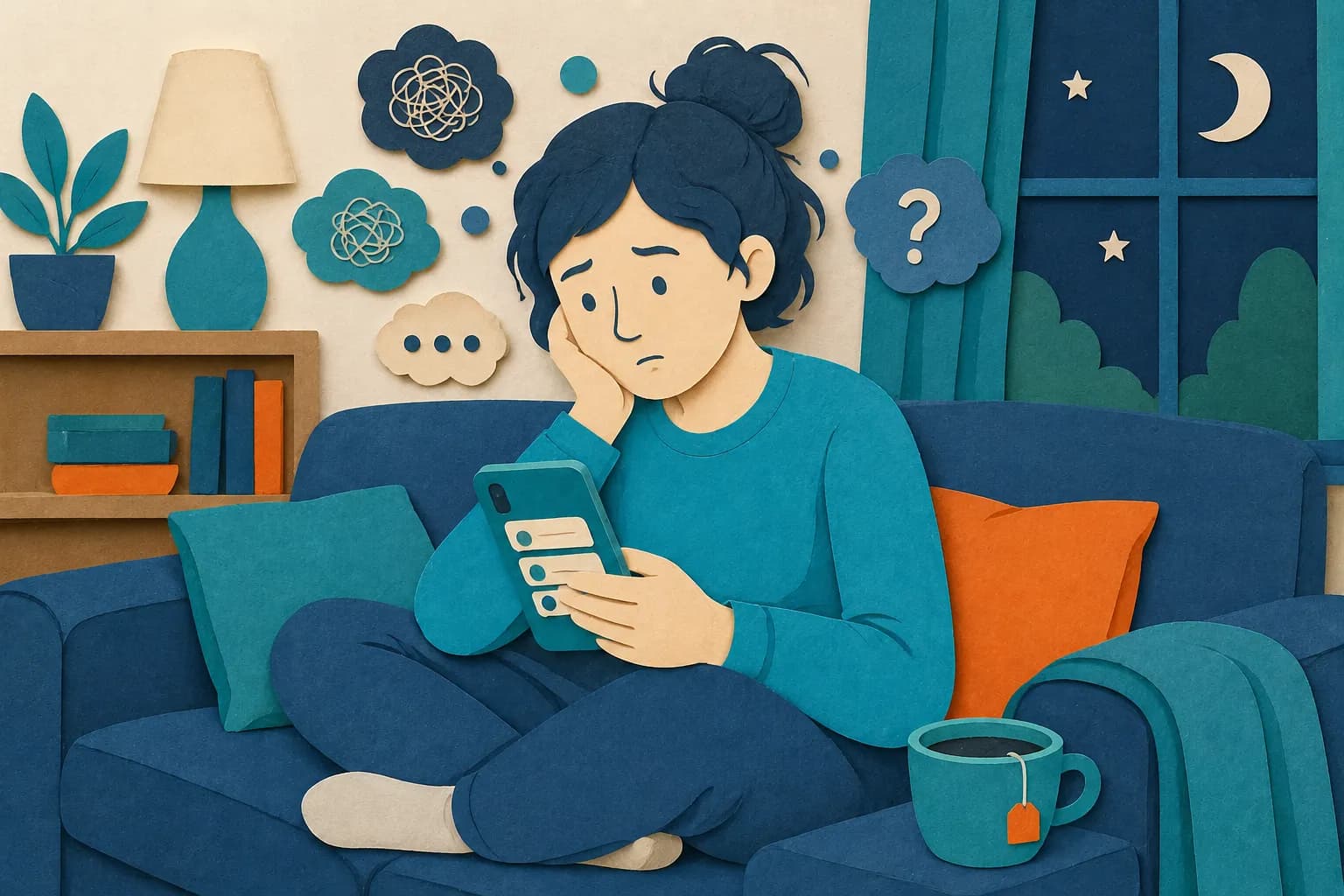
A work message that sounds colder than usual, misplaced keys, one too many questions from your partner — and suddenly everything feels too loud. Your heart races, something sharper than intended slips out. A few minutes later comes the second wave: shame and the thought that you've done it again. ADHD emotional dysregulation often looks exactly like this — not "drama" or "overreacting," but a nervous system that reaches the red zone faster and comes back down much more slowly.
This matters because many adults with ADHD spend years being told they are oversensitive, explosive, or "too much." Yet difficulties with emotion regulation are common in adults with ADHD and affect relationships, work, and self-esteem. Understanding this doesn't remove responsibility — but it changes the starting point: instead of moral judgement, there is room for understanding.
ADHD Emotional Dysregulation: Why Small Triggers Become Big Crises
With ADHD, the problem is rarely the emotion itself. The difficulty arises when a feeling fires very quickly, climbs very high, and is hard to brake before it turns into words or decisions. That is why small things can unravel an entire day — they land on an already overloaded system.
A systematic review published in PLOS ONE in 2023 found that adults with ADHD more frequently use non-adaptive emotion regulation strategies and score higher on dysregulation measures than people without ADHD. The authors also describe connections between these difficulties and greater symptom severity, poorer executive functioning, and higher co-occurring psychiatric burden.
"Adults with ADHD show a more frequent use of non-adaptive emotion regulation strategies compared to people without ADHD symptoms." — Soler-Gutiérrez, Pérez-González, Mayas, PLOS ONE (2023)
In practice this means attention doesn't detach easily from a trigger, frustration escalates into an impulse faster, and the brain has a smaller gap between "that got to me" and "now I'm reacting." This is not evidence of weak character — it's a difficulty with self-regulation that has a neurodevelopmental basis. For many people, understanding the broader picture of ADHD symptoms in adults is the right place to start — not just the concentration-focused checklist.
Sensory Overload, Impulsivity, and the Body Saying "Enough"
ADHD emotional dysregulation very often doesn't start with conflict — it starts with overload. Too much noise, too many things at once, too little sleep, hunger, time pressure, an ambiguous message, several unfinished tasks. Any single one of these might be manageable. Together they create a state where the nervous system behaves like an overloaded circuit breaker.
NICE guidelines emphasize that assessment of an adult with ADHD should cover not only inattention and impulsivity but also social and occupational functioning and co-occurring emotional difficulties. This matters because an anger outburst or sudden tears are usually not isolated events — they are part of a larger picture.
CHADD notes that in adults with ADHD, emotional over-reactivity, irritability, explosiveness, and low frustration tolerance are part of the clinical profile. Add impulsivity — the tendency to act before reflection kicks in — and the cost in relationships doubles. The person with ADHD often understands they overreacted; reason simply arrives one second too late. If this dynamic keeps showing up in close relationships, it is worth exploring ADHD and relationships in more depth.
The Emotional Hangover: Why Shame Follows the Outburst
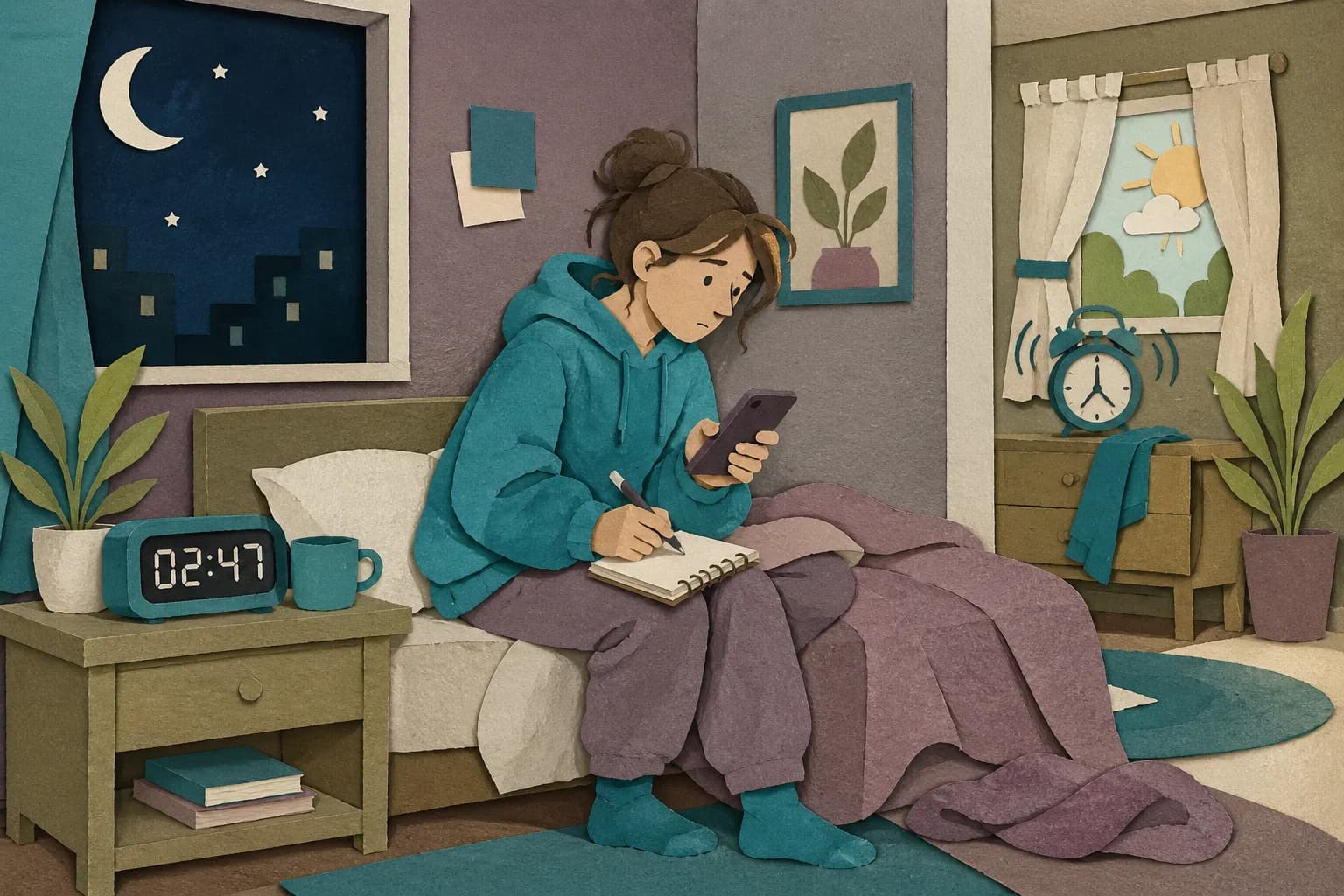
Many people describe not just the outburst itself, but what comes after. The adrenaline drop, exhaustion, numbness, replaying the scene, the urge to hide and disappear for the rest of the day. This state is sometimes called an emotional hangover. It is not a formal diagnostic category, but it captures the experience precisely: body and mind recovering from a reaction that was too intense.
This phase is often what does the most damage to self-esteem. The inner voice says: "A normal person wouldn't have reacted like that," "I ruined everything again," "I'm toxic." The problem is that shame is itself a powerful trigger. Instead of regulation, a new spiral begins — followed by avoiding the conversation, over-explaining, or withdrawing from the people you care about. The more often this cycle repeats, the easier it becomes to confuse a symptom with an identity.
A 2024 study published in the Journal of Attention Disorders, based on a sample of 1,539 young adults with ADHD, found that emotion regulation difficulties significantly predicted impairment and internalizing problems beyond core ADHD symptoms alone. In other words, it's not just the attention piece — the emotional dimension of ADHD can strongly account for overwhelm, anxiety, and mood crashes.
This is also where naming things accurately often brings relief. When you understand that an intense reaction didn't come from nowhere, it becomes easier to interrupt the automatic self-blame loop and move toward regulation, rest, and repairing the relationship.
Do you have ADHD?
Quick online assessment based on the latest research
How to Regulate Emotions with ADHD When the Wave Is Already Coming
There is no single technique that will make emotions less intense. There are, however, strategies that shorten the path from being flooded to regaining a sense of agency. They work best when they are simple and accessible before tension reaches the tipping point.
1. Notice body signals before the argument takes over
For one person the signal is a clenched jaw; for another, a faster breath or the feeling "I'm about to explode." CHADD notes that with ADHD an emotional reaction can easily take over before the calmer analysis of the situation has a chance to engage. That is why the first step is simply recognizing that the wave is already building.
2. Cut off input instead of trying to win
When you are overloaded, continuing an argument usually makes things worse. Sometimes the most mature response is stepping out for a moment, drinking a glass of water, or taking 90 seconds of silence. Regulation is not running away — as long as you come back to the conversation after you have reconnected with yourself.
3. Have one backup sentence ready
In the grip of a strong emotion, a single pre-set phrase helps: for example, "I'm overloaded and I don't want to say something too sharp. I'll come back to this in 15 minutes." That sentence protects the relationship.
4. After an outburst, start with regulation — not self-trial
If the emotional hangover has already arrived, come back to a functional baseline first. Food, sleep, a walk, a shower, reducing stimulation — then analysis. Holding yourself accountable at peak overwhelm usually only adds more shame.
5. Track the pattern, not just the single incident
Do outbursts mostly happen in the evenings? After work? When you are hungry? In noisy environments? After criticism? A brief three-sentence note after a hard day can show that the problem is not "random." Once the pattern becomes visible, it is easier to build safeguards around it.
When to Seek Help and How to Talk to Your Partner About It
The right time to seek support is not when everything falls apart — it is when you see a recurring cost. If ADHD emotional dysregulation is leading to frequent conflicts, shame spirals, anxiety, depression, substance use, or thoughts of giving up, that is not "just your personality." It is a signal that professional help would make a real difference.
CBT and DBT-informed approaches have shown effectiveness for ADHD-related emotional difficulties. If you are unsure where to begin, a good first step is exploring whether an ADHD diagnosis is worth pursuing or taking an online ADHD screening test.
Conversations with loved ones tend to go better when they do not begin from a defensive position. Instead of "this is just how I am," try: "I can see I am reacting more intensely than I want to, and I am working on it." You can also describe your mechanism in plain language — that under overload your alarm goes off faster, you need a brief pause, and then you come back. Partners do not need to walk on eggshells, but they can learn to recognize the moment when support works better than continued pressure.
A good conversation is not about excusing everything through ADHD. It is about working out together what helps both of you — for example, agreeing not to bring up difficult topics late at night, or that during an argument either person can call for a 20-minute break. Simple agreements like these often make an enormous difference.
FAQ — Common Questions About ADHD Emotional Dysregulation
Is emotional dysregulation a symptom of ADHD?
It is not listed as a separate diagnostic criterion in the DSM-5, but research and clinical practice consistently show that it occurs very frequently in adults with ADHD. This is why it is increasingly discussed as a central part of the ADHD picture — not just an add-on.
How do I know whether it's ADHD or just stress and burnout?
Stress can produce similar reactions in anyone, but with ADHD there is usually a broader pattern: attention difficulties, impulsivity, sensory overload, recurring conflicts, and traces of these challenges going back to childhood. If that combination sounds familiar, it is worth speaking with a specialist experienced in adult ADHD diagnosis.
Can ADHD medication help with emotional regulation?
For some people, yes — because reducing impulsivity and improving self-regulation also affects emotions. Medication alone does not teach new response patterns, which is why it is often best combined with psychoeducation or therapy.
How do I recognize ADHD in an adult when anger outbursts are the main concern?
Look beyond anger or tears. Helpful questions include whether there are also difficulties with concentration, organization, impulsivity, time management, and sensory overload — and whether similar challenges were present earlier in life.
Won't talking to my partner about ADHD just sound like an excuse?
It might — if it is only used to close off a conversation. But if you are not just saying "I have ADHD" but also "I see my pattern, I am taking responsibility for it, and I am proposing concrete solutions," that typically builds trust rather than eroding it.
Summary: ADHD Emotional Dysregulation — Key Takeaways
ADHD emotional dysregulation means that a small trigger can set off a disproportionately strong reaction, then leave behind shame and exhaustion. This does not reflect weak character — it reflects a nervous system that needs different regulation tools than the standard advice to "just calm down." The sooner you recognize the pattern, reduce overload, and seek support, the more likely you are to start regaining a sense of control.
Sources
- Evidence of emotion dysregulation as a core symptom of adult ADHD: A systematic review — Soler-Gutiérrez A-M., Pérez-González J-C., Mayas J., 2023. https://journals.plos.org/plosone/article?id=10.1371/journal.pone.0280131
- Emotional Dysregulation in Emerging Adult ADHD: A Key Consideration in Explaining and Classifying Impairment and Co-Occurring Internalizing Problems — Goh P.K. et al., 2024. https://pubmed.ncbi.nlm.nih.gov/39342440/
- Attention deficit hyperactivity disorder: diagnosis and management — NICE, current version. https://www.nice.org.uk/guidance/ng87/chapter/Recommendations
- Adult ADHD and Emotions — CHADD, 2020. https://chadd.org/attention-article/adult-adhd-and-emotions/