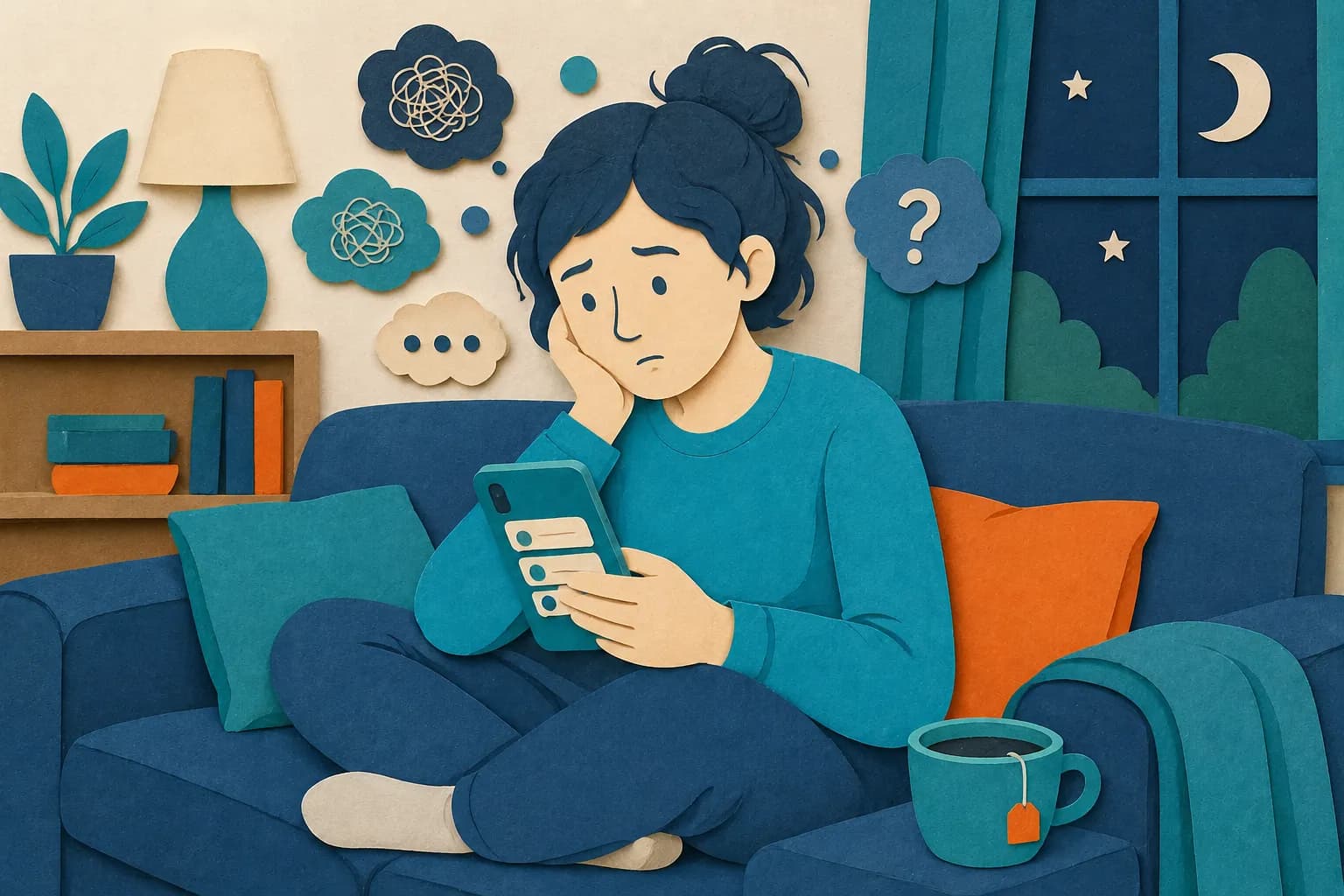
ADHD and Sleep: Why Falling Asleep and Waking Up Are So Hard
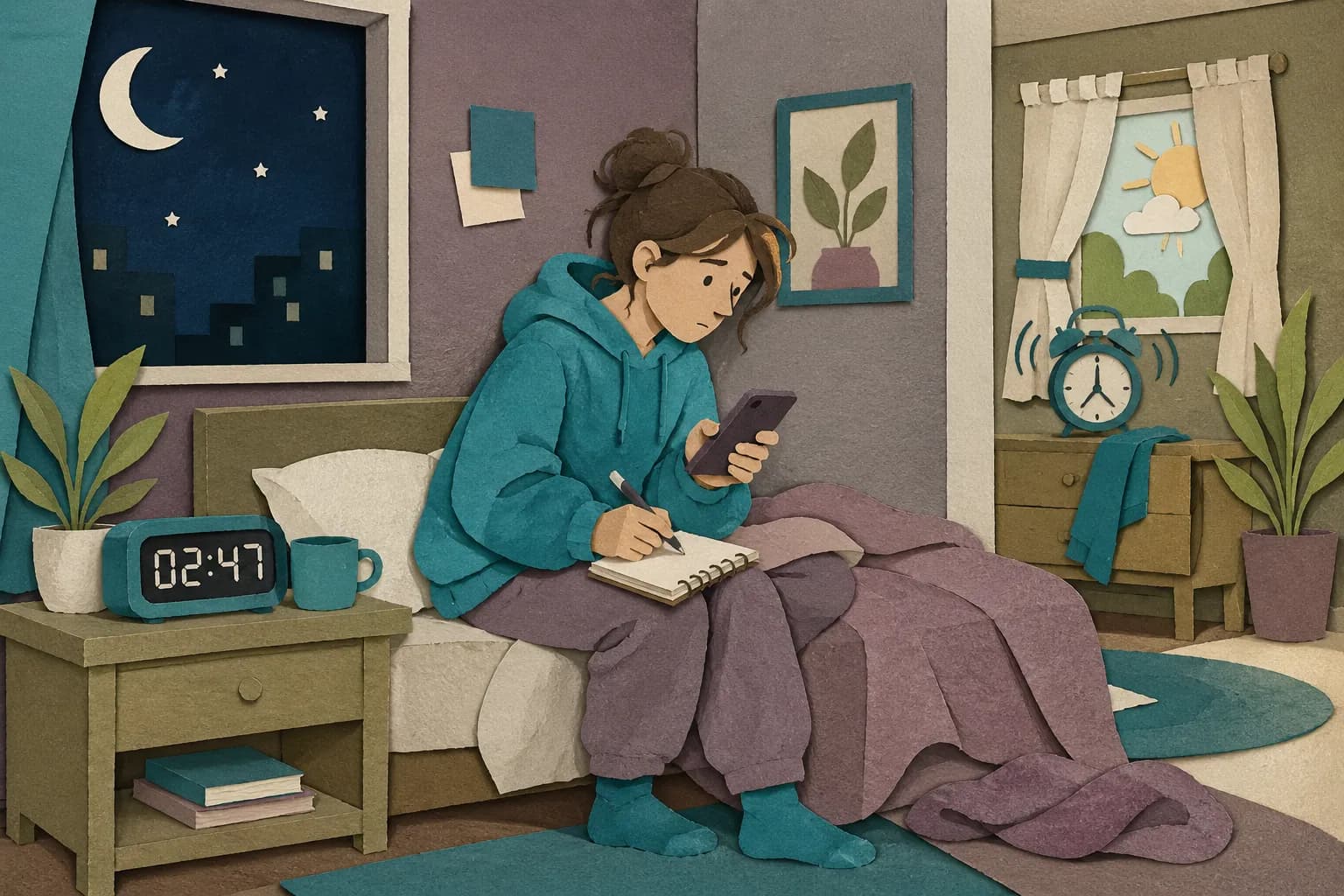
At 10:30 p.m., life suddenly begins. The day dragged by in a fog, the brain refusing to cooperate — but now, in the evening, focus arrives, ideas flow, energy returns, and there's finally an urge to watch something, get work done, or just have some time to yourself. Then the morning alarm hits like a punishment. ADHD and sleep often fall into exactly this brutal cycle: too awake in the evening, too groggy in the morning.
This doesn't mean you simply "can't manage to go to bed earlier." Sleep problems in adults with ADHD are common and go beyond just difficulty falling asleep — they also involve a delayed circadian rhythm, trouble winding down, and heavy morning starts. Poor sleep can worsen impulsivity, scattered attention, and emotional dysregulation.
ADHD and Sleep: Where That Late-Night "Second Wind" Comes From
For many adults with ADHD, the biological clock runs a little differently than it does for most people. Research and clinical reviews describe a more frequent evening chronotype, later melatonin release, and a stronger tendency toward delayed sleep phase. In practice, the body and brain may not receive the "time to sleep" signal until well into the night — even when every rational part of you knows the hour has long since passed.
That's why advice like "just go to bed earlier" often falls flat. If arousal only drops late in the evening, the quiet that follows can feel like genuine relief. Suddenly it's easier to focus, because no one is asking anything of you and there's no need to switch between tasks.
A 2021 clinical review found that adults with ADHD went to bed later, took longer to fall asleep, and reported daytime sleepiness and difficulty waking up more often than controls. This matters because the problem isn't confined to nighttime insomnia — it runs through the entire rhythm of the day. A difficult morning isn't a separate malfunction; it's almost always a continuation of what happened the night before.
This pattern is easy to miss. For years, sleep complaints get attributed to "stress" or "being a night person," even when they're part of a broader ADHD picture.
Why You Have Energy at Night but Can't Get Going in the Morning
Evening arousal in ADHD rarely has a single cause. It's a mix of neurobiology and the cumulative load of the day. The brain craves stimulation, struggles to brake, loses track of time easily, and often only finds space for its own needs after all the day's demands have been met.
The first mechanism is difficulty with transitions. Stopping something enjoyable or absorbing is hard even when you're already tired. A show, a game, or a sudden "now I'll finally sort everything out" can act as a bridge between exhaustion and continued stimulation.
The second is reclaiming the day. After hours of operating under pressure, the night can start to feel like the only part of the day that's truly yours. That's the root of the familiar feeling: "just a little longer — this is finally my time."
The third mechanism is light and stimulation. Screens, bright lights, fast-paced content, notifications, and app-hopping all send the brain a signal to keep going rather than wind down. With ADHD, this effect tends to be amplified because technology delivers instant stimulation and makes it easy to escape boredom.
By morning, everything rebounds with extra force. Sleep was too short or too shallow, so starting the day requires more executive effort — and executive functions (planning, initiating action, transitioning between tasks) are exactly what ADHD strains most. A difficult morning with ADHD isn't a motivation problem; it's a nervous system that's slow to start and running on empty.
In a study by van Andel et al., shifting the biological rhythm alone wasn't enough to automatically push sleep earlier. The authors emphasized that real change in sleep timing also requires behavioral support and concrete habits.
This explains why good advice without structure so often fails. You can know exactly what would be sensible and still have no access to it at 11:47 p.m.
Revenge Bedtime Procrastination Is Not Weakness — It's an Attempt to Reclaim Control
"Revenge bedtime procrastination" sounds like a trendy phrase, but it describes a very familiar experience: deliberately delaying sleep even when you know you'll pay for it tomorrow. For many people with ADHD, this isn't simply self-indulgence — it's a way of reclaiming a sense of freedom after a day full of demands, chaos, or unmet needs.
This distinction matters, because moralizing almost always makes things worse. If you treat late-night delay as evidence of weak character, shame enters the picture — and shame rarely helps you get to bed earlier. More often it pushes you toward another round of the same relief.
A more useful question is: what are you trying to give yourself in the evenings? Time for yourself, a chance to decompress, a reward, or the feeling that — finally — no one is pulling you in any direction? Naming that makes it easier to look for real support rather than fighting the symptom.
If you recognize a similar pattern in other areas of your life, take a look at the article on ADHD and procrastination. The same delay mechanism often just changes its costume — from daily tasks to putting off going to sleep.
This is also a good moment to let go of perfectionism. The goal isn't a flawless wellness evening or a productivity-manual morning. It's less friction between you and sleep. Even if at first you only shorten the late-night stretch by 20 minutes, that's still a real change.
Do you have ADHD?
Quick online assessment based on the latest research
How to Make the Transition to Sleep Easier — Without Fighting Yourself
The most effective strategies are rarely dramatic. They work because they reduce the number of decisions and help shift from doing-mode to winding-down-mode. Instead of asking "how do I force myself to sleep?", a better question is: "how do I set up my evening so it naturally nudges me toward bed?"
Micro-Routines Instead of Grand Evening Discipline
Big, elaborate rituals often collapse after three days with ADHD. A micro-routine should be small and predictable. One song that signals the end of scrolling. Washing your face and setting the alarm. A glass of water on the nightstand. The charger out of reach.
It's about the sequence, not the ideal. When the evening steps are consistently similar, you rely less on motivation and more on a recognizable cue for your brain. If you're looking for simpler everyday supports, see also practical tips for adults with ADHD and natural methods for supporting ADHD.
Morning Light, Less Light in the Evening
Light is one of the most powerful regulators of the circadian rhythm. Going outside in the morning — even for 10–15 minutes — helps shift your system toward earlier wakefulness. In the late evening, bright lights and screens make it harder to ease into drowsiness.
Not everyone can put the phone down an hour before bed, and that's okay. A more realistic approach is a "softer landing": dimming the lights after a set time, closing the most absorbing apps, switching to grayscale mode, or leaving the phone outside the bedroom. Realistic support works better than strict rules you won't be able to sustain.
Alarms That Help You Get Up — Not Just Trigger Guilt
With ADHD, a single alarm often only starts negotiations with yourself. Multiple signals at different functions tend to work better: the first to wake you up, the second to prompt sitting up, the third for a first concrete action — opening the blinds or washing your face. A good morning system actually starts the night before. Laying out clothes, setting out water, putting medication where you'll see it, prepping a simple breakfast — these can do more than the most motivating alarm sound. If the alarm rings seven times, that's not laziness; it means the system needs rebuilding.
If you have chronic insomnia despite these changes, snore loudly, wake with a pounding heart, have symptoms of restless legs syndrome, or experience daytime sleepiness severe enough to affect your safety, it's worth speaking with a doctor. Sometimes the problem isn't just ADHD but a separate sleep disorder. If you're not yet certain whether ADHD is involved, you can take an ADHD test online and use the result as a starting point for further evaluation.
FAQ — Common Questions About ADHD and Sleep
Can ADHD really make it harder to fall asleep?
Yes. Adults with ADHD more often experience delayed sleep phase, difficulty quieting the mind, racing thoughts, and a stronger tendency toward evening arousal. This isn't just a bad habit — though habits can make the problem worse.
Why is it so hard to get up in the morning with ADHD, even after a long sleep?
Because the issue isn't only about sleep duration — it's also about timing and quality. If you fall asleep late, sleep lightly, or your circadian rhythm is shifted, waking up in the morning can feel like being pulled out of the middle of the night. Add to that the executive function difficulties that make actually starting the day harder.
Is revenge bedtime procrastination an ADHD symptom?
It's not a formal diagnostic criterion, but it occurs more frequently in people with ADHD because it connects to self-regulation difficulties, time blindness, and the need for late-night stimulation. In practice, delaying sleep is often a way of reclaiming personal time after an overwhelming day.
Does melatonin help with sleep in adults with ADHD?
Sometimes, but it's not a universal fix or a substitute for proper evaluation. Research suggests melatonin can help with delayed sleep phase, though it works best as part of a broader plan — alongside managing light exposure, consistent wake times, and an evening routine. Talk to a doctor about dosage and whether it makes sense for your situation.
Summary: ADHD and Sleep
ADHD and sleep isn't a topic about willpower — it's about regulating arousal, circadian rhythm, and the difficult transitions between activity and rest. If you come alive in the evenings and can barely get going in the morning, you're not broken. You're likely stuck in a cycle that's very typical of ADHD. Small, repeatable changes help most: morning light, a simpler evening wind-down, fewer decisions in the morning, and more compassion for your own nervous system. When this pattern significantly disrupts daily life, treat it as an important signal worth exploring further — through diagnosis or treatment — rather than a source of shame.
Sources
- Attention-Deficit/Hyperactivity Disorder and Delayed Sleep Phase Syndrome in Adults: A Randomized Clinical Trial on the Effects of Chronotherapy on Sleep — van Andel E. et al., 2022. https://pubmed.ncbi.nlm.nih.gov/36181304/
- Effects of chronotherapy on circadian rhythm and ADHD symptoms in adults with attention-deficit/hyperactivity disorder and delayed sleep phase syndrome: a randomized clinical trial — van Andel E. et al., 2021. https://pubmed.ncbi.nlm.nih.gov/33121289/
- Managing Sleep in Adults with ADHD: From Science to Pragmatic Approaches — Hvolby A., Shankman J., Surman C., 2021. https://www.mdpi.com/2076-3425/11/10/1361
- The optimal system of care for the management of delayed sleep onset in adult ADHD in the UK: a modified Delphi consensus — Hargitai J. et al., 2025. https://pmc.ncbi.nlm.nih.gov/articles/PMC12392164/
- Tired But Wired: Sleep and ADHD — CHADD, 2025. https://chadd.org/adhd-news/adhd-news-adults/attention-tired-but-wired-sleep-and-adhd/