ADHD and Replying to Messages: Why It Feels So Hard
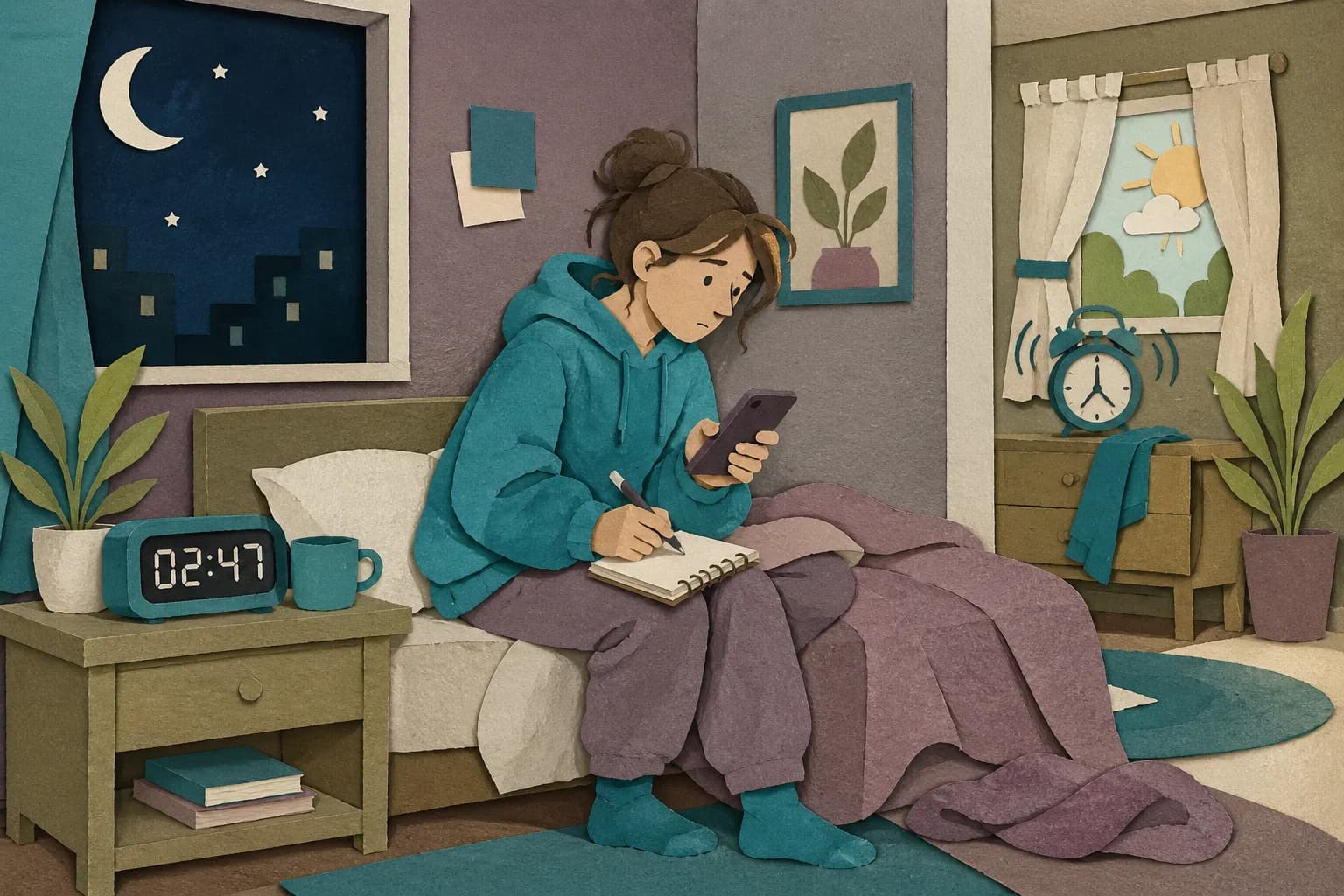
One unanswered message can sit in your head for a week. Then two. In ADHD, something this small easily becomes a low-level internal alarm that resurfaces while you're brushing your teeth, at work, and right before sleep. Not because the relationship doesn't matter — often it's the opposite. The reply feels simultaneously simple and strangely impossible to start. ADHD and replying to messages frequently come down to the same mechanism: the intention is there, but access to action suddenly disappears.
Qualitative research shows that adults with ADHD struggle to maintain contact, often forget to reach out to people they care about, and describe written communication as more draining than face-to-face interaction. On top of this, rejection sensitivity means that a delayed reply — either from the other person or from themselves — can grow into an emotional problem, not just an organisational one. That's why replying late so rarely ends with a simple "hey, sorry."
ADHD and replying to messages — more than just one ignored text
In the article on ADHD and friendships, we described how contact can fade even when the connection genuinely matters. With messages, this dynamic can intensify. Your phone constantly reminds you that you "need to reply," but never offers a good moment to actually engage with the task. When you're busy, you defer it. When you finally have a quiet moment, you're tired — or you feel the reply should be longer and more considered.
A 2023 study by Ginapp et al. captures this well. Participants described relationships weakening because they kept forgetting to reach out, and written communication felt harder to manage than meeting in person. One participant put it plainly: they liked people and felt comfortable face-to-face, but hated emails and messages because things moved too slowly and it was frustrating.
This is an important distinction. Not replying doesn't have to mean not caring. It often points to cognitive friction: difficulty initiating, switching attention, holding an intention in working memory, and closing a small task that is, in practice, not so small.
Do you have ADHD?
Quick online assessment based on the latest research
Why ADHD causes avoidance when it comes to replying
Replying to a message requires several steps at once. You need to notice the message, decide whether to respond now or later, hold the topic in working memory, compose a response, gauge the tone, and hit send. If you're already overwhelmed, the brain starts treating this as a task with too many micro-steps.
Research on procrastination shows that in ADHD it is more strongly tied to inattention than to impulsivity. When a task is unclear, dull, or carries the risk of emotional discomfort, avoidance kicks in easily. A message from someone close can be exactly that kind of task: theoretically brief, but emotionally unpredictable. Executive function difficulties, disorganisation, and trouble closing small daily tasks appear regularly in the ADHD literature as factors that strain relationships — despite good intentions.
Digital noise adds another layer. Messaging apps mix urgent, trivial, emotional, and random content in the same stream. As the volume of stimuli grows, replying to one message stops being one message. It becomes another item in a growing queue of open loops.
The pressure of the perfect reply turns silence into anxiety
For many people the problem starts with perfectionism and ends in anxiety. You have in your head that the reply needs to be warm, thoughtful, specific — ideally addressing every thread of the conversation. The more the relationship matters, the greater the pressure to get it right. And if three days have already passed, you now also need to justify the delay.
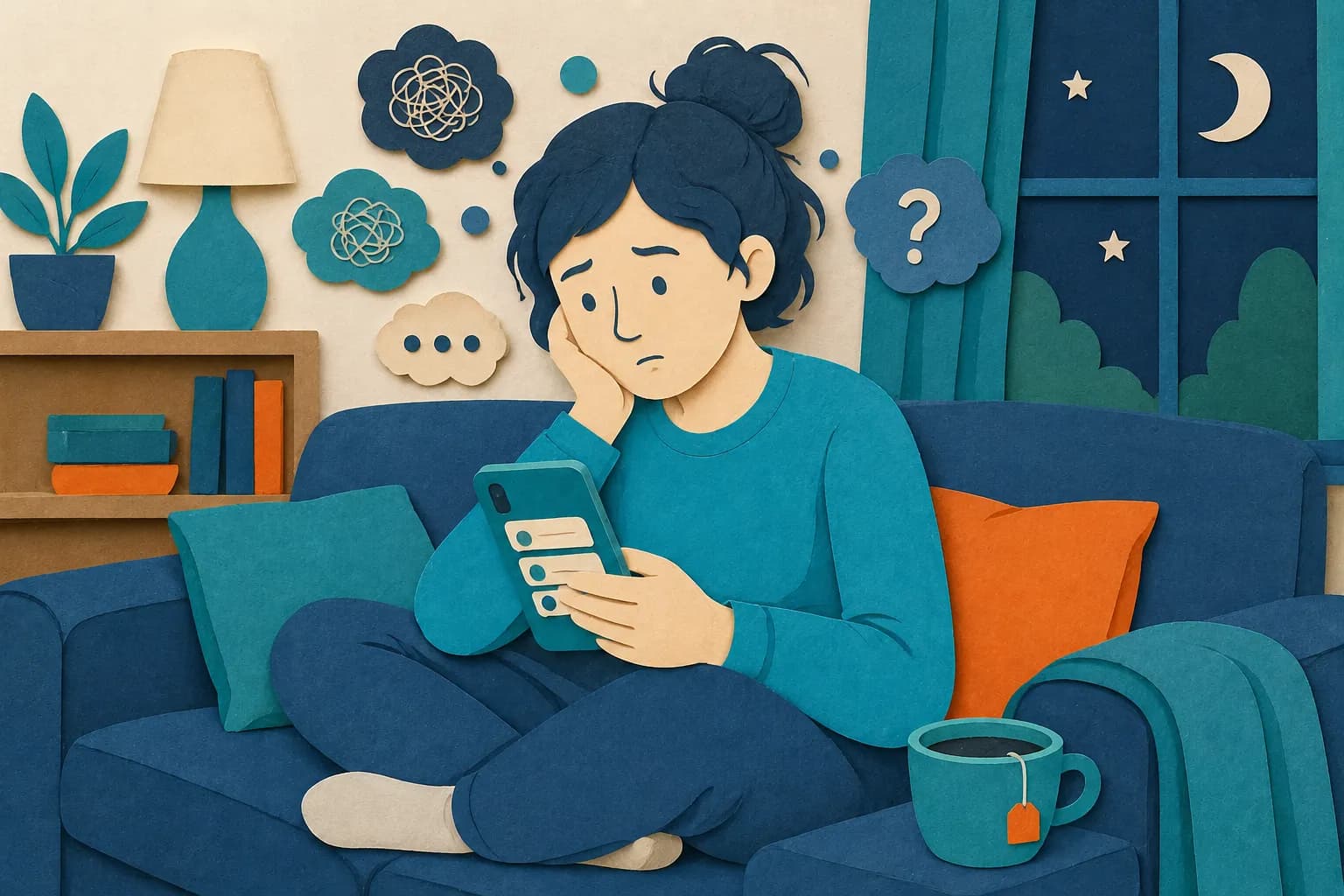
In a qualitative study on rejection sensitivity in ADHD, participants described the anticipation of rejection as more painful than rejection itself. Some withdrew preemptively to avoid triggering that tension. One very concrete example emerged: an unanswered message was read as a sign of rejection, leading to late-night phone-checking and mounting stress.
"They may assume that an unanswered text message is a rejection." — Gair et al., PLOS One (2025)
If this feels familiar, it's worth naming it precisely. This isn't "drama over a text." It's a combination of emotional dysregulation, overwhelm, and interpreting silence as threat. That's exactly why ADHD emotional dysregulation so often pairs with delayed replies: you avoid the discomfort first, and then the avoidance itself generates even more tension. You avoid the tension — and then the avoidance creates more of it.
How to reduce friction before five unanswered threads pile up
The most effective strategies usually don't involve "more discipline" — they involve lowering the barrier to entry. The goal is to make starting a reply easier than continuing to avoid it.
1. Accept the imperfect reply
Not every message needs full resolution. Sometimes a short bridge is enough: "Seen — I'll reply tonight," "Thanks, I'll come back to this tomorrow," "I'm behind on replies but I haven't forgotten you." That message doesn't resolve everything, but it stops the spiral of interpretation on both sides.
2. Write your own short-reply templates
A saved list of go-to phrases works well. For example:
- "Hey, thanks for your message. I'm behind on replies but I'll get back to you."
- "Can I reply tomorrow? I want to give it proper attention."
- "Sorry for the silence. Quick answer for now: yes / no / works for me."
This isn't being inauthentic. It's a prosthetic for moments when resources are low. If the problem is starting, a template shortens the distance between reading and sending.
3. Configure your messaging apps for your ADHD brain
Mute groups that generate noise. Keep only conversations that genuinely need action visible. Where apps allow it, pin important chats and disable notification previews for others — so each vibration doesn't trigger a new micro-decision. The fewer random stimuli in your inbox, the easier it is to see one specific message as a finite task.
4. Make replying a ritual, not a test of character
Some people do well with one short daily window — say, 15 minutes after lunch. Others prefer two micro-blocks of 10 minutes. The goal isn't perfect inbox zero. It's a regular moment where the brain learns: this is when I close short replies. You can pair this with the "just one message to start" principle from the article on ADHD and procrastination.
Body doubling and other strategies for replying after a long silence
Body doubling can be surprisingly effective for tasks like catching up on unanswered messages — not because the other person does anything, but because their presence helps maintain attention and lower the threshold from avoiding to acting. You can sit next to a partner or friend, or join someone on a 15-minute video call and say: "I'm just going to reply to three messages right now."
One honest caveat: body doubling is a widely used strategy in the ADHD community, and clinicians describe it as helpful — but solid research on its effectiveness is still limited. It's more of a practical tool than a gold-standard intervention. That said, it makes sense as a low-risk option, especially when the biggest barrier is simply getting started.
It also helps to split the reply into two stages. First, send a brief signal that you're present. Then, later, follow with a fuller response. This way you're not simultaneously apologising, explaining, answering the substance, and managing tone all at once. If the app itself feels too charged, drafting in a notes app first can also reduce friction.
When silence has lasted a long time, simplicity usually works best. Instead of a carefully constructed explanation that's once again hard to send, often this is enough: "Hey, I've been absent for a while. This message was sitting on my mind but I found it hard to start. If you'd like, I'm ready to pick it up now." That message is human, accountable, and doesn't pile on another layer of perfectionism.
FAQ — Common questions about ADHD and replying to messages
Is it normal to reply days or weeks late when you have ADHD?
Yes — many people with ADHD describe exactly this pattern. It's rarely about not caring. It usually comes down to a combination of overwhelm, difficulty initiating, and mounting tension as the delay grows longer.
Does not replying mean the relationship doesn't matter?
No. Qualitative research tends to show the opposite: people with ADHD often feel deeply invested in their relationships, but struggle to maintain regular contact in written form. In practice, it's often the relationships that matter most that feel hardest to reply to — because the pressure to get the response right is greatest.
How do you reply after a long silence when shame has already built up?
Short and without over-explaining tends to work best. One line like "Sorry for the silence — I found it hard to start, but I'm here now" usually lands better than trying to write the perfect, comprehensive message. The goal is resuming contact, not perfectly justifying the gap.
Does body doubling actually help with replying to messages?
It can — especially if the main barrier is getting started. For many people, having someone present lowers the tension and raises the chance of sending at least one reply. Worth trying as a low-effort, low-risk strategy, even if the evidence base is mostly anecdotal rather than clinical.
Summary: ADHD and replying to messages — key takeaways
ADHD and not replying to messages is rarely about poor manners — it's about an overloaded executive and emotional system. The faster you remove the pressure of the perfect reply, the easier it is to break the cycle of avoidance, shame, and continued silence. Short bridge messages, personal templates, well-configured apps, and the presence of another person all help. If you want to better understand whether these patterns appear more broadly in your life, you can take an ADHD test online.
Sources
- The lived experience of rejection sensitivity in ADHD: A qualitative exploration — Gair et al., PLOS One, 2025. https://pmc.ncbi.nlm.nih.gov/articles/PMC12822938/
- The experiences of adults with ADHD in interpersonal relationships and online communities: A qualitative study — Ginapp et al., PLOS One, 2023. https://pmc.ncbi.nlm.nih.gov/articles/PMC10399076/
- The relation between procrastination and symptoms of attention-deficit hyperactivity disorder (ADHD) in undergraduate students — Altink et al., International Journal of General Medicine, 2014. https://pmc.ncbi.nlm.nih.gov/articles/PMC6878228/
- Attention deficit hyperactivity disorder: diagnosis and management — NICE Guidelines NG87, updated 2018. https://www.nice.org.uk/guidance/ng87/chapter/recommendations
- Body doubling for ADHD: Definition, how it works, and more — Medical News Today, 2024. https://www.medicalnewstoday.com/articles/body-doubling-adhd