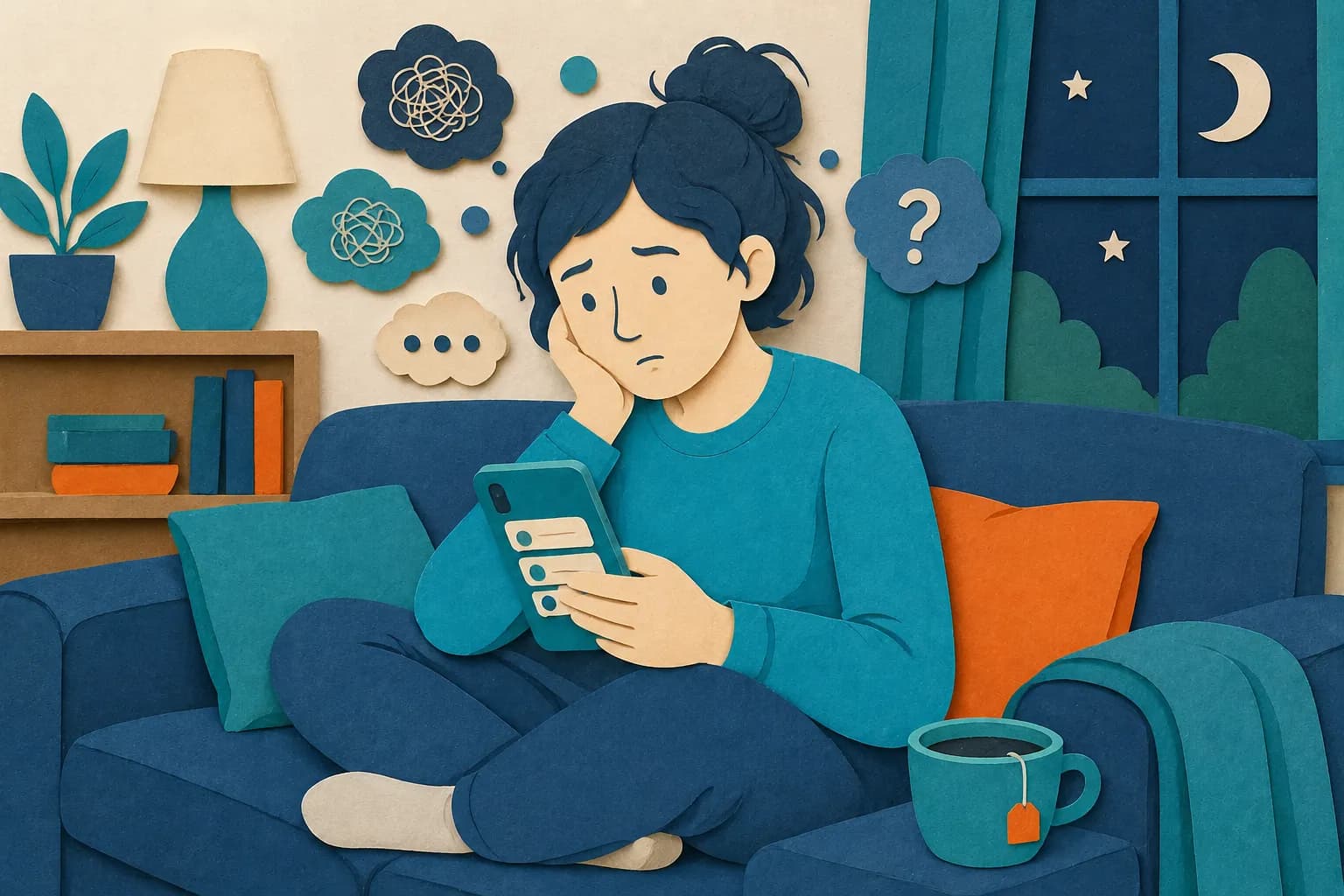
ADHD Late Diagnosis: Processing Relief, Grief, and Anger

A late ADHD diagnosis rarely brings just one clear emotion. More often, it unfolds like this: first comes relief, because suddenly things start clicking into place — and then, almost immediately, anger, sadness, or a strange emptiness. Memories from childhood, school, work, and relationships resurface in a completely different light. What had seemed like laziness, disorganization, or "oversensitivity" for years suddenly has a different explanation. That's exactly why a diagnosis can feel like both a breath of fresh air and a reason to grieve.
This doesn't mean you're overreacting or that the diagnosis was a "bad idea." For many adults, an ADHD diagnosis triggers a genuine process of rethinking their own history. Clinical research shows that adults with ADHD frequently struggle with emotional regulation, experience a reduced quality of life, and spend years relying on strategies that never quite fit. It's no wonder that when a name finally arrives for these experiences, the emotions refuse to stay neatly in one box.
Late ADHD Diagnosis Often Starts with Relief
The relief that comes with an adult ADHD diagnosis can be profound — it puts an end to years of asking yourself what's wrong with you. Suddenly, a lot of scattered puzzle pieces start fitting together: forgetting simple things, feeling overwhelmed by small tasks, making impulsive decisions, struggling to maintain any kind of daily rhythm — and sometimes emotional dysregulation that had been mistaken for a "hot temper" or "lack of perspective."
A recurring observation in clinical practice is that a correct ADHD diagnosis often lifts the weight of guilt and shame. That's a very concrete shift. Instead of "why can others manage and I can't?", you start asking "how does my nervous system work and what does it need?" This isn't an excuse. It's a more accurate description of the problem — and a better starting point for getting real help.
"You grieve the realization that your life could have been so much easier, if you had just known." This line from a conversation published by WebMD captures the paradox of a late diagnosis perfectly: relief doesn't erase the pain — it just finally gives you a word for it.
If you're only beginning to suspect you might have ADHD and aren't sure whether to pursue a diagnosis, a useful first step might be taking an online ADHD test or reading about whether an ADHD diagnosis is worth it. Neither replaces a specialist, but both can help you organize your symptoms and prepare for a consultation.
Where the Anger and Grief Come From After an ADHD Diagnosis
After the initial wave of relief, many people hit a second emotional wave. Anger surfaces — directed at former teachers, parents, past partners, employers, or doctors who saw only the symptoms without understanding the mechanism. Sometimes that anger turns inward: "if I'd pushed harder to look into this sooner, maybe things would have been different." It's a deeply human reaction, but it usually rests on a false premise — that we once had access to knowledge, resources, and support that simply didn't exist at the time.
The grief tends to center on a parallel life that can never be verified. It might be about a degree you didn't finish, a relationship that fell apart, a career path you abandoned, your mental health, or simply the daily energy you spent masking without knowing it. For some people, a late ADHD diagnosis also triggers mourning for the self-image built over years around labels: lazy, inconsistent, difficult, chaotic, too emotional. You have to let go not just of lost time, but of the old story you told about yourself.
It's important not to pathologize this reaction. Emotional intensity is itself common in ADHD, and a 2023 systematic review found that adults with ADHD use more maladaptive emotion regulation strategies than people without ADHD. This means that after a diagnosis, you may feel things more intensely, more quickly, and to a degree your environment considers disproportionate. That doesn't mean you're overreacting. It means you need time and tools to integrate this new information.
Do you have ADHD?
Quick online assessment based on the latest research
How to Stop the "What If" Spiral
Counterfactual thinking after a diagnosis is almost unavoidable. Your brain starts recalculating the past: if I'd known sooner, I wouldn't have quit so many jobs; if I'd known sooner, I wouldn't have treated every stumble as proof that I was fundamentally broken. The problem isn't the question itself — it's that it can easily become a daily ritual of self-punishment.
What tends to help is shifting the focus from an alternate past to your current patterns. Instead of asking "what if," try asking: which difficulties in my life are most likely rooted in ADHD, and which are really the accumulated weight of burnout, anxiety, or old beliefs? When you frame it that way, the diagnosis stops being a verdict on the years you've lost and becomes a map for the months ahead.
In practice, a simple three-column exercise works well: what was a symptom, what was a coping mechanism, and what still serves you. For example, chronic procrastination may have been a symptom; perfectionism may have been a survival strategy; quick thinking or high empathy may still be genuine strengths. A new narrative isn't about rewriting the past — it's about honestly separating your difficulties from your character.
If you notice that revisiting old stories pulls you in too deeply, set a limit on how much time you spend there. Literally. Fifteen minutes of journaling, a session with a therapist, or one note on your phone tends to be far more useful than hours of abstract rumination. ADHD doesn't do well with open loops — the more abstractly you analyze the past, the easier it is to get stuck inside it.
Talking to Family After an ADHD Diagnosis and First Practical Steps
Conversations with family can be complicated, because a diagnosis reshapes not just your own self-image but also everyone else's interpretation of shared history. One person might feel relieved alongside you; another might become defensive; someone else might try to minimize the whole thing with phrases like "everyone's a bit like that." That's why it helps to know ahead of time what you actually want from the conversation. Not every exchange needs to end in full understanding. Sometimes the goal is just to share the facts and set a boundary.
Speaking in specifics rather than labels tends to go further. Instead of "I have ADHD, so everything was because of that," try: "the diagnosis explains why it's always been so hard for me to manage deadlines, overwhelm, and my emotions." That framing is less likely to spark a debate about definitions and more likely to invite someone to actually see your experience. If there's been a lot of criticism in your family dynamic, it helps to have one or two fallback lines ready — something like: "I'm not looking for opinions right now, just a moment of being heard" or "this isn't a conversation about blame, it's about understanding."
As for what to actually do in the first weeks after a diagnosis — don't try to fix everything at once. Clinical guidelines emphasize the importance of a thorough assessment of co-occurring difficulties, psychoeducation, and mapping out a support plan. That usually points to five practical first steps:
- Book a follow-up appointment to fully unpack the diagnosis — not just "pick up the result." Ask about co-occurring anxiety, depression, sleep issues, and which symptoms are most pronounced in your case.
- Write down three areas where ADHD disrupts your daily life the most — for example, sleep, work, and relationships. That's a better starting point than trying to overhaul your entire life at once.
- Seek out psychoeducation or therapy, ideally from someone who knows adult ADHD. A 2024 scoping review found that psychoeducation typically covers diagnosis, treatment, work, relationships, and coping strategies — exactly what you need after a fresh diagnosis.
- Simplify your environment by just one level. One to-do list, one calendar, one place for your keys. After a diagnosis, it's easy to hyperfocus on building the perfect system — and then burn out on it.
- Give yourself permission to move at an uneven pace. One day you might feel energized. The next day, angry. The one after that, nothing at all. That doesn't mean you're going backwards.
If, alongside the emotional weight, you're noticing practical difficulties with daily functioning, it's worth returning to the tools and strategies described in more detail in living with ADHD. A diagnosis gives you the name — but daily life usually improves through small adjustments, repeated consistently enough.
FAQ — Common questions about late ADHD diagnosis
Is it normal to feel both relieved and sad after an ADHD diagnosis?
Yes. Many adults experience a mix of relief, grief, and anger after receiving an ADHD diagnosis. The relief comes from finally having an explanation; the sadness comes from looking back at years of struggling without one. This combination doesn't mean the diagnosis is wrong or that you're making too much of it.
How do I stop obsessing over what life would have been like if I'd been diagnosed earlier?
The most useful shift is replacing "what if?" with a more forward-looking question: what does this diagnosis explain about my life today, and what do I want to do with that information? It also helps to give the analysis a concrete container — a therapy session, a short journal entry — rather than letting it loop endlessly in your head.
Do I have to tell my family about my ADHD diagnosis?
No. It's worth sharing when doing so might bring you support, make daily life easier, or help you set clearer boundaries. If you expect dismissal, prepare a brief and factual message in advance and don't feel obligated to defend your own experience in a debate.
What should I do first after an adult ADHD diagnosis?
Start by understanding your own profile of difficulties and discussing a support plan with a specialist. Only then is it worth layering in additional steps — psychoeducation, therapy, medication, or practical changes to how you organize your day.
Should I pursue a diagnosis if I only suspect I might have ADHD?
Yes, if symptoms regularly interfere with your work, relationships, sleep, or daily organization. A diagnosis doesn't fix everything on its own, but it points you in the right direction and reduces the risk of spending more years chasing the wrong explanations.
Summary: late ADHD diagnosis and what comes after
A late ADHD diagnosis very often opens two processes at once: relief at finally having an explanation for the struggles, and grief for years spent without one. The goal isn't to move on quickly — it's to build a new, more truthful story about yourself. If you feel anger, sadness, or chaos after your diagnosis, that's not a failure. It's part of making sense of your own history. Over time, a late ADHD diagnosis can become not the end of an old version of you, but the start of a more honest and compassionate way of living.
Sources
- Learning You Have Adult ADHD Can Bring Grief, Relief, and Other Emotions — WebMD, 2023. https://www.webmd.com/add-adhd/features/adult-adhd-diagnosis-emotions
- Recommendations | Attention deficit hyperactivity disorder: diagnosis and management — National Institute for Health and Care Excellence (NICE), NG87. https://www.nice.org.uk/guidance/ng87/chapter/recommendations
- The adult ADHD assessment quality assurance standard — Adamou M. et al., 2024. https://pubmed.ncbi.nlm.nih.gov/39156609/
- Psychoeducation for adult ADHD: a scoping review about characteristics, patient involvement, and content — Pedersen H. et al., 2024. https://pubmed.ncbi.nlm.nih.gov/38273266/
- Evidence of emotion dysregulation as a core symptom of adult ADHD: A systematic review — Soler-Gutiérrez A.M. et al., 2023. https://pubmed.ncbi.nlm.nih.gov/36608036/
- Functional impairment and quality of life in newly diagnosed adults attending a tertiary ADHD clinic in Ireland — Adamis D. et al., 2024. https://pubmed.ncbi.nlm.nih.gov/38755511/