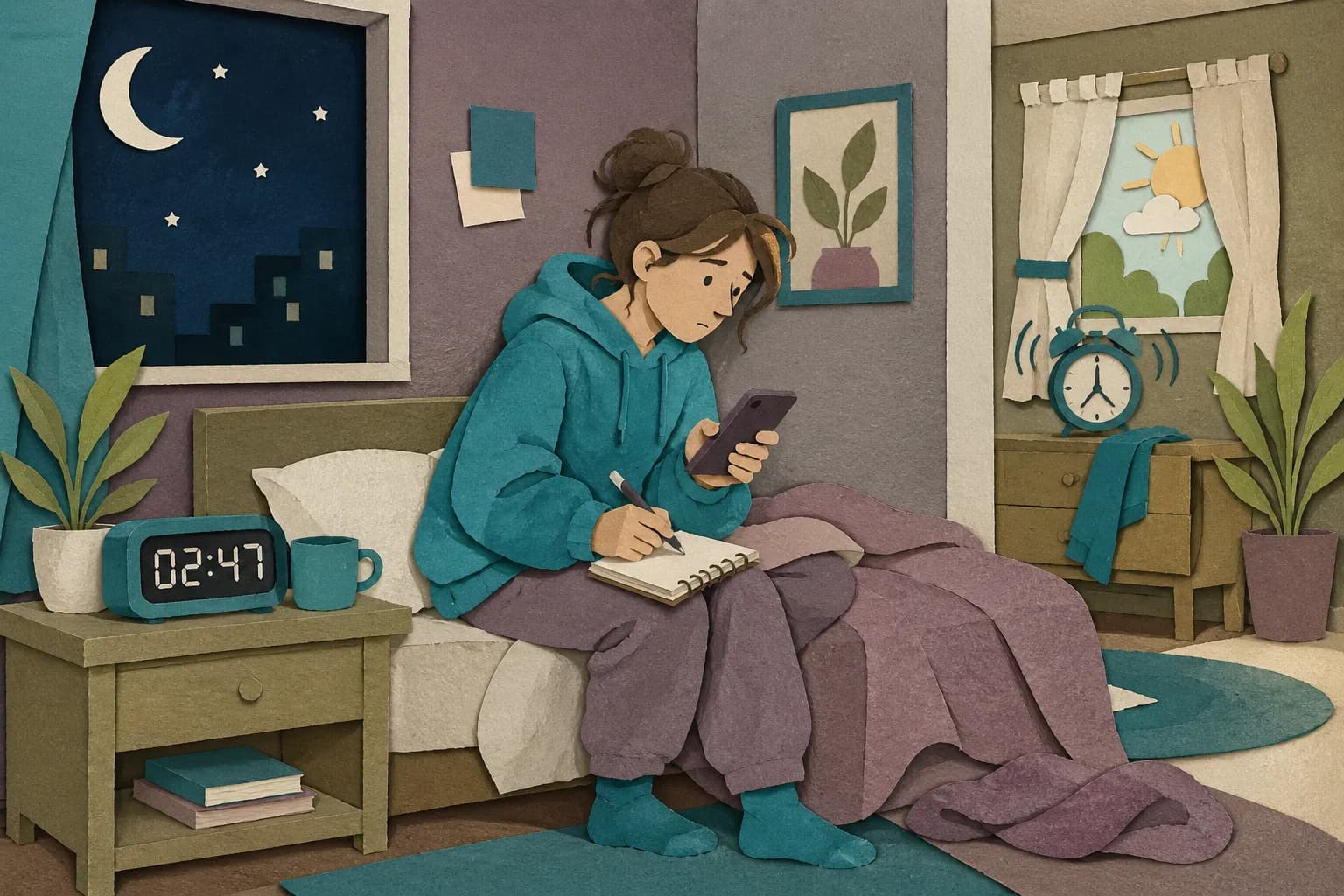
Not Laziness — ADHD Burnout and Overload
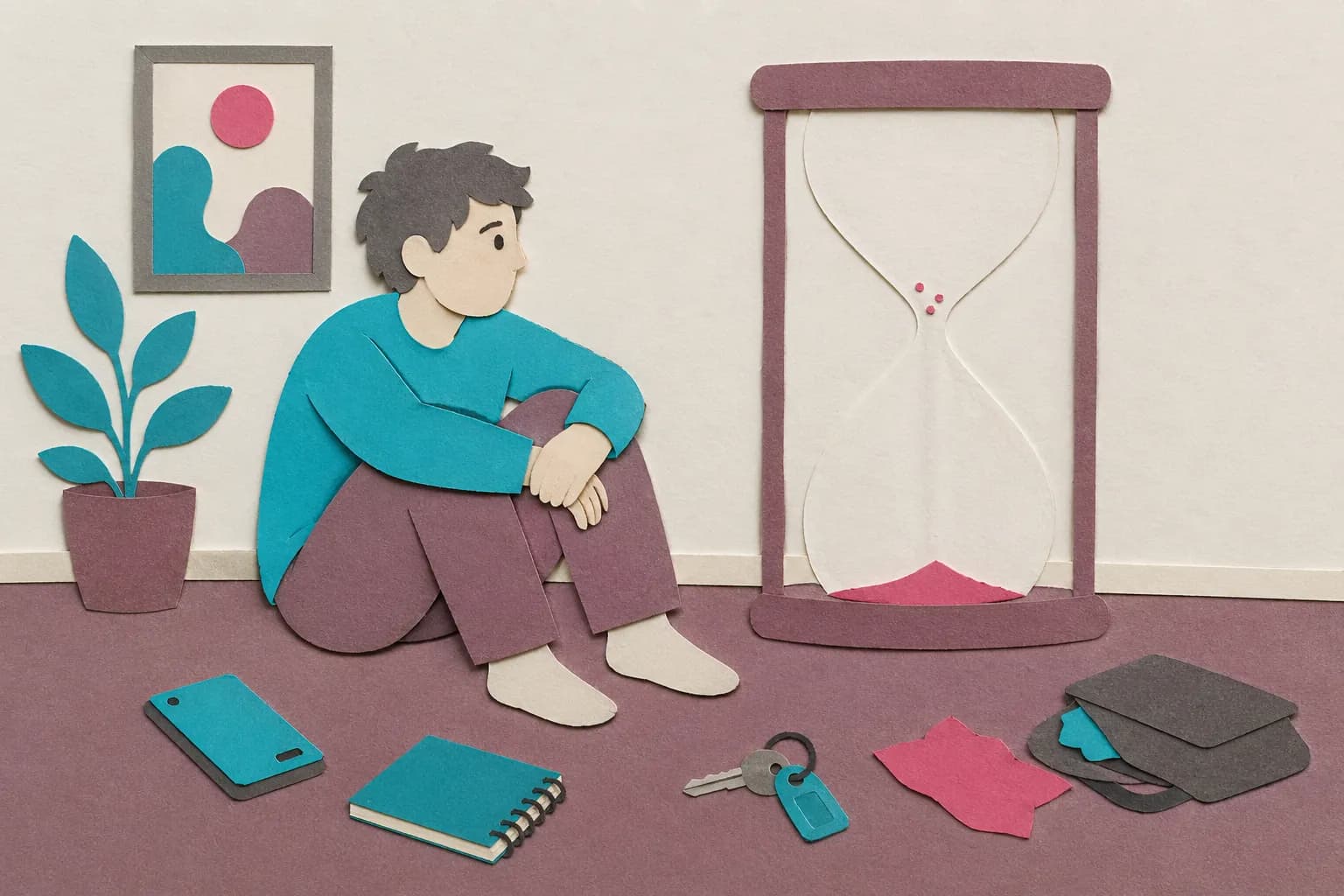
There comes a point where you stop telling yourself to just push harder — because there's genuinely nothing left to push with. You open your laptop, stare at a simple email you need to send, and feel a resistance completely out of proportion to the task. Your backlog keeps growing. You catch yourself avoiding things not because you don't care, but because even small tasks have started to feel painful. This often isn't laziness. It's overload — and with ADHD, it can masquerade as ordinary disorganization for a long time.
That's why ADHD burnout matters. Many people operate on borrowed energy for years. They meet deadlines on their last reserves, mask the chaos, catch up through sleepless nights — then get told they should simply be more consistent. The problem is that model only holds for so long. Eventually, the mind and body send the bill.
ADHD Burnout Doesn't Come from Nowhere
ADHD by itself doesn't mean burnout. But it does raise the risk of living in a constant state of catch-up. Many things that happen automatically for other people require deliberate effort with ADHD: tracking time, switching between tasks, staying organized, remembering small details, inhibiting impulses, returning to an interrupted activity. None of that is visible from the outside. Internally, the cost can be enormous.
A 2024 study found that among working adults with ADHD, the link between ADHD and burnout was significantly mediated by executive function difficulties — particularly time management and self-organization.
"The relationship between ADHD and job burnout is mediated by executive function deficits — especially time management and self-organization — rather than by ADHD symptoms alone." — Turjeman-Levi, Itzchakov & Engel-Yeger, PMC (2024)
That sounds technical, but in practice it means very ordinary things: everything takes longer, requires more effort to start, falls apart more easily under pressure, and is harder to finish.
Masking adds to this. That's the effort of appearing calmer, more organized, and more "normally functional" than you actually feel. For many adults with ADHD, masking is a constant social strategy. It helps avoid looking bad, but it drains energy. If you've been running on internal tension and external performance for a long time, overload isn't an exception — it's the predictable outcome.
It's Not the Same as Laziness
Laziness assumes you could do something but simply don't want to. Overload looks different. Often you want to — sometimes very much. It's just that the nervous system no longer cooperates the way it used to. A strange stalling sets in. Tasks that were once manageable suddenly feel heavy, sticky, repellent — not because they've lost meaning, but because your reserves have dropped below the threshold needed to get started.
This distinction matters, because people with ADHD very easily turn overload into a character flaw. Instead of reading it as a warning signal, they tighten the screws on themselves. More pressure, more shame, more comparisons to people who "somehow manage." That mechanism rarely helps. More often it deepens the crash.
Burnout, Depression, and Chronic Fatigue Are Not the Same Thing
These states can overlap and sometimes occur together, but it's worth not lumping them into one category.
Burnout usually has a clear connection to overload, excessive demands, and a prolonged period of operating beyond your resources. Improvement often begins when you genuinely reduce the load or bring in better support.
Depression is broader and more serious clinically. It can include depressed mood for most of the day, loss of pleasure in activities, a sense of hopelessness, changes in sleep and appetite, and sometimes thoughts of giving up. If you recognize that picture in yourself, don't treat it purely as ADHD burnout. That's the moment to reach out to a specialist.
Chronic fatigue or day-to-day overwhelm can look similar to burnout, but doesn't always carry the same level of emotional detachment. Sometimes it's the result of months of sleep deprivation, living in chaos, constant crisis management, and no real recovery. For many people with ADHD, that's exactly where the spiral begins.
The honest approach is: you don't need to diagnose yourself from an article. What you do need is to notice the pattern and assess whether you need rest, more support, or professional help.
How to Recognize ADHD Burnout
Most of the time there's no single dramatic collapse — just a series of small signals that add up over time.
1. Simple Tasks Start Costing an Absurd Amount of Energy
Replying to an email, booking an appointment, putting laundry in the machine, opening a document. Nothing huge — but every task feels like it weighs a ton. If that pattern sounds familiar, see also the article on replying to messages with ADHD. For many people, that's one of the first areas to break down under overload.
2. Rest No Longer Resets You the Way It Used to
The weekend passes and you feel no relief. A vacation doesn't restore you — it just offers temporary numbness. You scroll in the evenings or lie there without energy, but with no sense of actually recovering. Sometimes a disrupted sleep cycle feeds into this — something we covered in the article on ADHD and sleep.
3. Your Emotional Margin Gets Smaller and Smaller
You're quicker to snap, faster to fall apart, slower to return to baseline after small stressors. It's not just anger. It can also be tearfulness, irritability, emotional flatness, or the feeling that everything overwhelms you faster than it used to.
4. More and More Energy Goes Into Hiding the Problem
Instead of asking for help, you work out how to appear in control. You delay responses, avoid meetings, disappear from things that used to be routine. From the outside you might still look "put together." Inside, it's getting harder to breathe.
5. Shame Becomes the Main Driver
You're no longer acting because something matters. You're acting to avoid failing, to avoid disappointing someone, to avoid looking lazy. That's a deeply corrosive kind of motivation. It can deliver results in the short term. Almost always, it burns you out in the long run.
Do you have ADHD?
Quick online assessment based on the latest research
Why People with ADHD So Often Drive Themselves into the Wall
Because for years they learn to compensate rather than genuinely adapt their environment to how they work. Instead of a simpler system, more effort. Instead of early rest, another push. Instead of saying "this is too much," trying to pull everything over the finish line.
This tends to be especially pronounced for people who received a late diagnosis. For a long time they lived with the story that they were inconsistent, scatterbrained, or not disciplined enough. When adult life then adds work, relationships, household logistics, and the need for constant self-management, the old coping strategy starts cracking. If any of that resonates, the article on ADHD late diagnosis may also be useful.
ADHD burnout isn't limited to professional life. You can burn out on everyday existence. On constant remembering. Constant catching up. Constantly being the person who's just going to sort out this one last thing before resting — except that rest keeps getting pushed back.
What Actually Helps — and What Usually Makes Things Worse
The worst advice at this stage is "you need to push harder." If you're overloaded, adding pressure typically produces a brief rebound followed by an even harder crash.
A better approach is less dramatic but far more effective.
Reduce the Number of Open Fronts
Don't start by asking how to do everything. Ask what genuinely needs to stay. ADHD burnout very often requires ruthless simplification. Fewer projects. Fewer commitments. Fewer decisions being held in your head at once.
Stop Relying Purely on Willpower
Checklists, repeatable routines, reminders, support from another person, body doubling, ready-made reply templates, simpler work environments. These aren't crutches for the weak. They're normal tools that offload executive function.
Treat Rest as Part of Recovery from Overload
Not all rest is regenerating. If you've been overstimulated all day, two more hours of scrolling may just keep scattering your nervous system. Sometimes what works better is sleep, quiet, a walk without a podcast, limiting sensory input, a simple meal, a conversation where you don't have to pretend everything is fine.
Stop Borrowing Energy from Your Future Self
This is one of the most costly strategies in ADHD. Pull an all-nighter, make it up tomorrow. Push through the week, rest after. One more sprint and things will ease up. The problem is that the debt grows, and eventually the body stops extending credit.
Give Yourself Permission to Use Medical and Therapeutic Support
If ADHD is untreated or poorly managed, overload tends to come back. Sometimes what's needed is an adjustment to treatment, psychoeducation, therapy, or a real look at sleep, anxiety, and daily demands. If you don't have that foundation yet, read more about ADHD treatment in adults.
When to Seek Help Sooner Rather Than Later
Don't wait until everything collapses. Warning signs include: being unable to return to basic functioning for an extended period, avoiding almost everything, crying more often or feeling empty, serious sleep problems, symptoms of anxiety, or a sense of hopelessness.
If thoughts arise that you've had enough, that you want to disappear, or that others would be better off without you — take that very seriously. That's not a topic for another self-help article. It's the moment to reach out urgently to a psychiatrist, psychotherapist, a crisis support line, or someone close who can make sure you're not facing it alone.
FAQ — Common Questions About ADHD Burnout
Is ADHD burnout an official diagnosis?
Not as a separate diagnostic category. It's a useful description of a state of overload, exhaustion, and reduced functioning that follows a characteristic pattern in many adults with ADHD.
How do I know if it's burnout or depression?
You can't always separate them fully on your own. If symptoms are strong, prolonged, include loss of pleasure, hopelessness, or thoughts of giving up, consult a specialist. In practice, these states often overlap.
Is a vacation enough to recover from ADHD burnout?
Sometimes it helps, but it's rarely sufficient on its own — because when you return, the same chaos, the same lack of support, and the same way of operating are waiting. Often what's needed isn't just a break, but a change in how you organize your life.
What can I do today if I feel like I'm already at my limit?
Pick one thing to unload today. Cancel something, postpone something, ask for help, leave crisis mode earlier, eat, drink water, put your phone down, go to bed earlier. It's unglamorous — but these are exactly the kinds of moves that most often mark the beginning of recovery from overload.
Summary: ADHD Burnout and Overload
ADHD burnout often doesn't look like a dramatic breakdown. It looks more like a life that costs a little more each month — even though it still appears to be working from the outside. If everything is starting to overwhelm you and the simplest tasks trigger resistance, don't assume the problem is laziness or a weak character. It's very likely that your system has been running beyond capacity for a long time.
That's good news and hard news at the same time. Good, because you're not broken. Hard, because pushing harder is unlikely to help at this point. What does help is noticing the pattern, lifting some of the load, and seeking support before your body does it for you by force.
If you want to better understand whether ADHD might be part of this picture, you can take an ADHD test online and use the result as a starting point for further assessment.
Sources
- Executive function deficits mediate the relationship between employees' ADHD and job burnout — Turjeman-Levi, Itzchakov, Engel-Yeger, 2024. https://pmc.ncbi.nlm.nih.gov/articles/PMC11007411/
- Is camouflaging unique for autism? A comparison of camouflaging between adults with autism and ADHD — van der Putten et al., 2024. https://pubmed.ncbi.nlm.nih.gov/38323512/
- Adult ADHD and Burnout — WebMD, 2024. https://www.webmd.com/add-adhd/adult-adhd-burnout
- ADHD Burnout: Cycle, Symptoms, and Causes — ADDA, 2025. https://add.org/adhd-burnout/
- Attention deficit hyperactivity disorder: diagnosis and management — NICE Guideline NG87. https://www.nice.org.uk/guidance/ng87/chapter/recommendations