ADHD Hyperfocus: What Intense Concentration Can Tell You

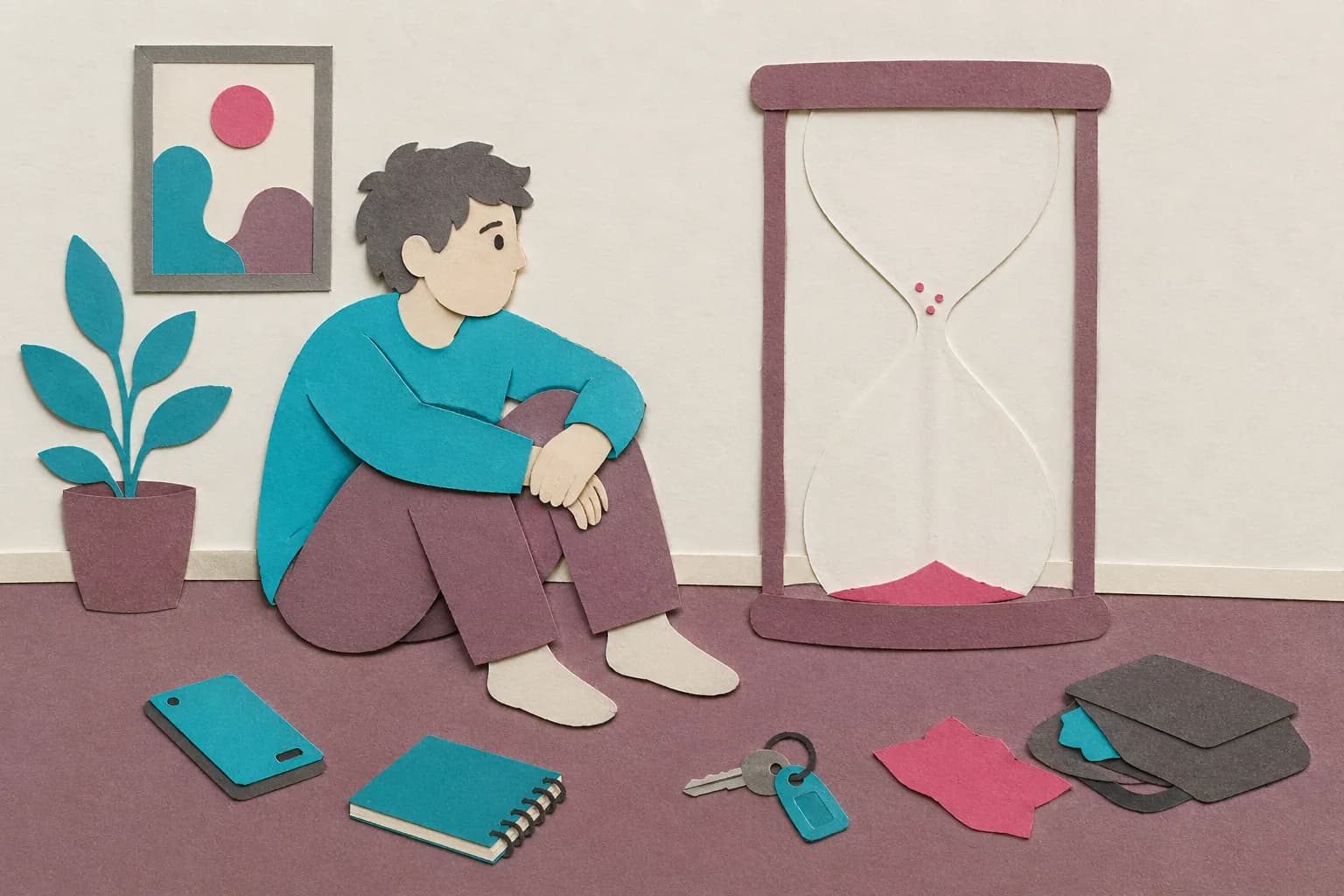
You sit down to do something “for a minute”. When you look up, it is later than you thought, and a message and your lunch are still waiting. This is an illustrative description of becoming absorbed in an activity, sometimes called hyperfocus. A question can follow: if I can concentrate like that, surely I cannot have ADHD?
Intense concentration on one activity does not by itself confirm or rule out ADHD. Hyperfocus is not a diagnostic criterion, is not exclusive to ADHD and does not have to occur in everyone with the condition. The question is not simply “Can I concentrate?” but also “Under what circumstances, on what, and can I shift my attention when I need to?”
Before calling it a skill or a problem, look at its consequences. An enjoyable evening with a hobby and regularly missing sleep are not the same situation, even if you use one word for both.
Hyperfocus describes absorption, not a diagnosis
In their review, Ashinoff and Abu-Akel describe hyperfocus as complete absorption in a task, to the point where someone appears not to notice the rest of their surroundings. They also highlight a problem: the literature does not have a single agreed definition. Different studies do not always mean exactly the same thing by the term.
Descriptions of the experience include losing track of time, reduced awareness of surroundings and difficulty stopping one activity to move to another. These are possible features of an experience, not a checklist for diagnosing yourself. Not every long stretch of work is hyperfocus; the number of hours alone does not provide a reliable answer.
Imagine editing a presentation. You keep changing details even though it is time to leave, and each “just one more thing” fails to bring you to a stopping point. Someone else reads a book for just as long but puts it down at the agreed time without much difficulty. These illustrate differences in the course and consequences of concentration, not clinical cases for you to classify.
It helps to separate three questions: did the activity absorb you, did you do what you intended, and could you finish when you needed to? Answering yes to the first does not settle the others. It does not describe your attention during other tasks, either. A broader understanding of ADHD symptoms in adults takes more than comparing a dull task with a favourite activity.
What ADHD hyperfocus research actually shows
Hupfeld, Abagis and Shah studied hyperfocus in adults. People reporting more ADHD symptoms also reported more hyperfocus experiences in the situations studied, including hobbies and screen use. “Reported” matters here: the researchers used questionnaires rather than directly observing every episode of concentration.
Participants also provided information about previous diagnoses; the study did not conduct an independent clinical ADHD assessment. An association in self-reports is not a diagnostic test or proof of a cause. You cannot reverse the finding and tell an individual that reporting hyperfocus means they have ADHD.
Results are not entirely consistent across studies. Using a different measurement approach, Groen and colleagues found no significant overall differences in occurrence, frequency or duration of hyperfocus between their ADHD group and the main matched comparison group. An additional comparison produced partly different findings. They noted limitations of measurement based on individual questions and participants' memories.
That does not mean “hyperfocus has nothing to do with ADHD” or “everyone with ADHD experiences it”. Studies differ in definitions, samples and how they collect information. A cautious conclusion is narrower: these experiences are described in ADHD, occur outside it too, and need further research.
There is no basis for promising that hyperfocus always improves the quality of someone's work, either. Ashinoff and Abu-Akel's review highlights uncertainty about actual improvements in task performance. You can feel deeply engaged and later judge the result in different ways. Time spent concentrating and the usefulness of the outcome deserve separate consideration, without pressure to turn every absorbing moment into productivity.
What about flow and hyperfixation? Flow is related to concentration and engagement, but a simple “flow is good and controlled, hyperfocus is bad and uncontrolled” table conveys more certainty than the sources support. The relationship remains open to discussion. Meanwhile, “hyperfixation” is sometimes used informally for a strong, recurring interest. Do not assume hyperfocus and hyperfixation are interchangeable clinical terms. An interest and an episode of becoming absorbed in it are not automatically the same thing.
Prepare a way out of the task, rather than forcing a break
If absorption does not cause problems in your life, finding a name for it does not mean you must fix it. If you frequently miss a meal, a commitment or bedtime, you could experiment with an easier way to finish. The following suggestions are low-risk organisational experiments, not a research-established treatment for hyperfocus.
Start before beginning the activity, rather than only once you are completely absorbed. Check your next commitment and choose a fairly concrete stopping point: saving a file, finishing a chapter or completing one section. “I'll stop when it's done” may not help when the task keeps expanding.
You could set one reminder for a time you choose. There is no universal interval after which everyone must take a break. If the signal helps, use it to check the time and your needs, not to judge your discipline. Repeatedly missing it tells you something about that approach's limits; it does not prove laziness.
When pausing, try leaving a brief note: “check the last paragraph next” or “return to this section”. The note is intended to help you return later; you do not have to finish every thought before leaving your desk. You can also check ordinary needs: is it time to eat, drink, move or get ready for sleep?
If you want another person's help, agree beforehand whether and how they should remind you to pause. A calm, agreed check-in is different from abruptly pulling someone out of an activity. This is not about controlling an adult or forcing compliance. The approach should respect your agreement and what feels acceptable to you.
After a few occasions, assess one concrete outcome: was it easier to leave on time or have a meal? You do not need a score for “how much hyperfocus I have”. Keep what helps and drop what only adds tension. None of these suggestions confirms ADHD or requires deliberately inducing hyperfocus.
When a broader conversation about attention matters
One evening spent on an interesting activity says little about a diagnosis. If difficulties with attention, organisation or switching tasks persist and affect different parts of life, consider discussing them with a qualified professional. You can start with concrete consequences without being certain what to call them.
ADHD assessment considers developmental history, difficulties across situations and their impact on functioning. NICE recommends a full clinical assessment, not a diagnosis based solely on a rating scale. The CDC also points to other possible explanations for similar difficulties, including sleep problems. You do not need to rule them out yourself before seeking help.
Note what absorbed your attention, what you intended to do and what happened as a result. Add examples from other situations and what you remember from earlier years. Do not select only events that fit an ADHD explanation. Preparation is meant to support an honest account, not persuade a clinician to reach a predetermined conclusion. Our article on adult ADHD assessment explains more about this stage.
Being able to become absorbed in something does not, on its own, explain how you manage attention across your life.
If you want to organise broader, persistent observations related to ADHD, you can use an ADHD screening test. Hyperfocus alone does not indicate that you have ADHD, and a screening result is not a diagnosis. Do not use it to confirm one particular experience or replace a professional assessment.
Do you have ADHD?
Quick online assessment based on the latest research
When describing consequences, avoid a blanket judgment such as “I wasted another day”. A more precise note might be: “I intended to stop before lunch, stopped after a phone call and ate later.” This is still only an illustration, not a hyperfocus template. Include an occasion when stopping was easy, too, so the discussion does not rest solely on your most frustrating memory. You do not need a minute-by-minute diary or proof that your concentration was intense enough. A few honest observations about what you want to change and what support you need are enough to begin.
FAQ — Common questions about ADHD hyperfocus
Does hyperfocus only occur in ADHD?
No. People without ADHD also describe experiences of intense absorption. It cannot by itself distinguish ADHD from autism or establish their co-occurrence. For that topic, read about the meaning of AuDHD in adults.
Does not experiencing hyperfocus mean I cannot have ADHD?
ADHD cannot be ruled out on that basis. Hyperfocus is not a required diagnostic criterion, and people with ADHD do not all have identical experiences. Assessment considers the broader pattern of symptoms and functioning.
Should I be able to switch hyperfocus on whenever I want?
That is not an obligation or a useful standard for judging your work. The research discussed here does not justify a promise that hyperfocus can be reliably triggered or guarantees better results. Supporting your working conditions and your ability to stop may be more helpful.
ADHD hyperfocus — key takeaways
Hyperfocus describes task absorption but does not settle an ADHD diagnosis. Research definitions and findings differ, so treat confident online explanations cautiously. If these experiences have difficult consequences, start with observations and a small experiment in ending an activity. Persistent difficulties across different areas of life deserve a broader assessment, not self-judgment based on one kind of concentration.
Sources
- Hyperfocus: the forgotten frontier of attention — Ashinoff BK, Abu-Akel A, 2021, published online 2019. https://doi.org/10.1007/s00426-019-01245-8
- Living “in the zone”: hyperfocus in adult ADHD — Hupfeld KE, Abagis TR, Shah P, 2019. https://doi.org/10.1007/s12402-018-0272-y
- Correction to: Living “in the zone”: hyperfocus in adult ADHD — Hupfeld KE, Abagis TR, Shah P, 2019. https://doi.org/10.1007/s12402-019-00296-6
- Testing the relation between ADHD and hyperfocus experiences — Groen Y et al., 2020. https://doi.org/10.1016/j.ridd.2020.103789
- Attention deficit hyperactivity disorder: diagnosis and management, NG87, section 1.3 — NICE, 2018. https://www.nice.org.uk/guidance/ng87/chapter/recommendations
- ADHD in Adults — CDC. https://www.cdc.gov/adhd/about/adhd-in-adults.html